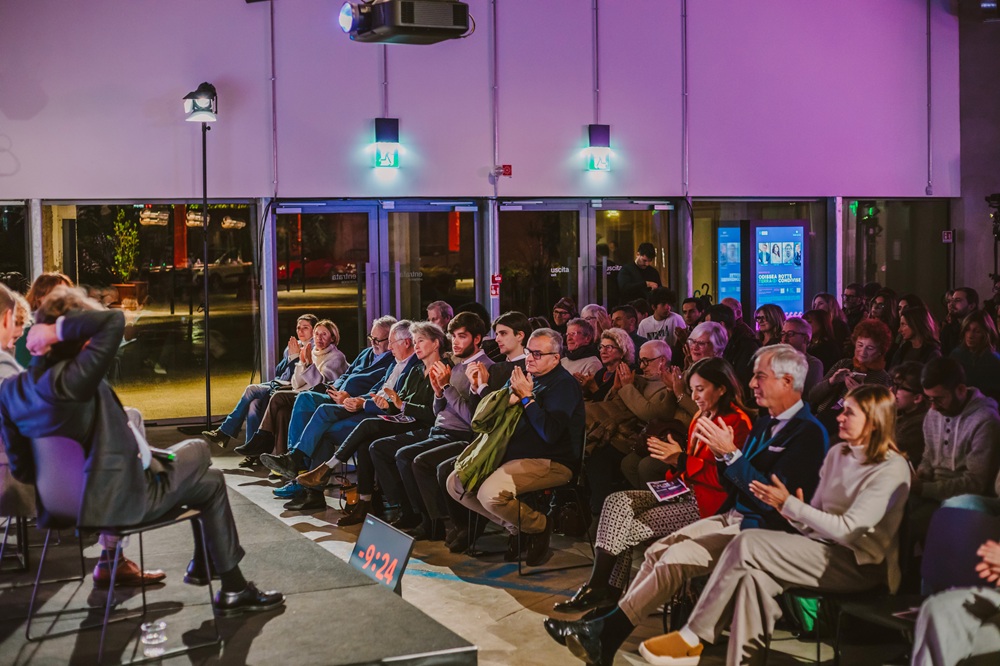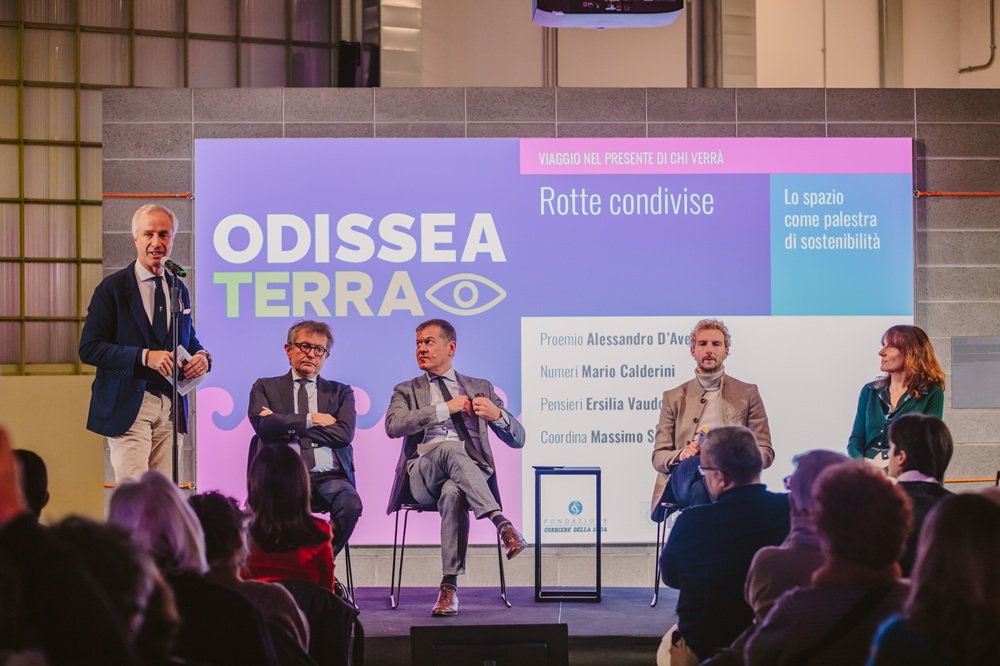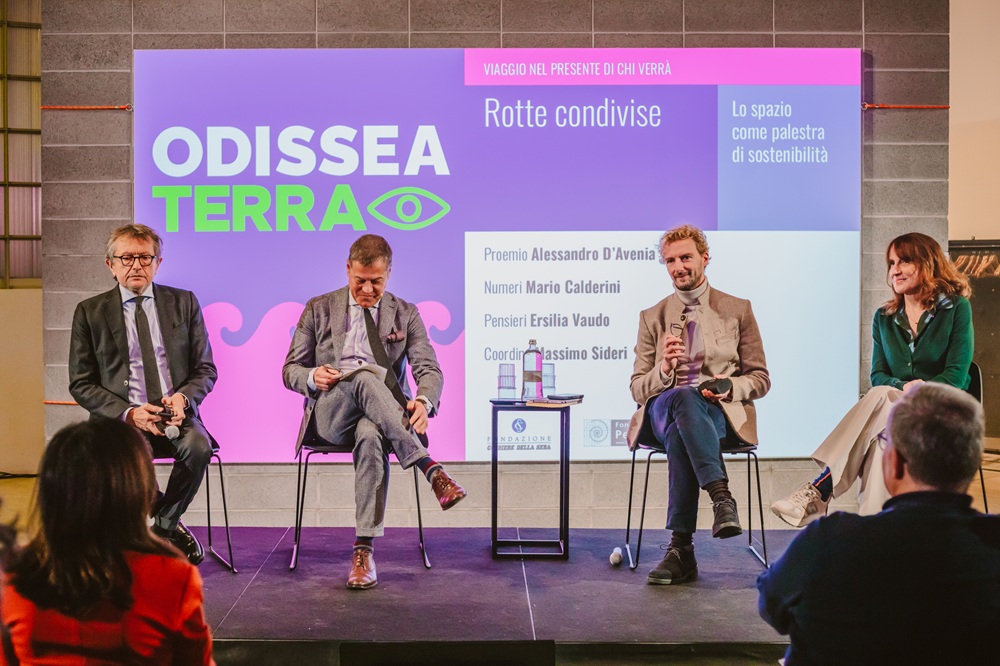
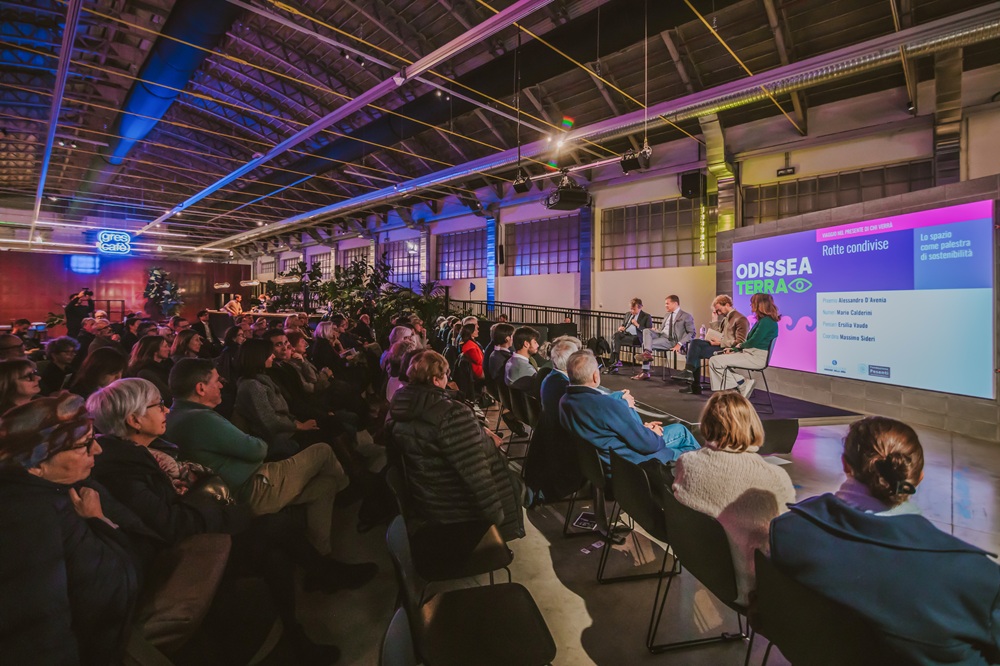
The fourth event of the Odissea Terra series, titled “Rotte condivise. Lo spazio come palestra di sostenibilità” (Shared routes. Space as a training ground for sustainability), promoted by Fondazione Pesenti and Fondazione Corriere della Sera, explored the cosmos as both a metaphor and a testing ground for sustainability.
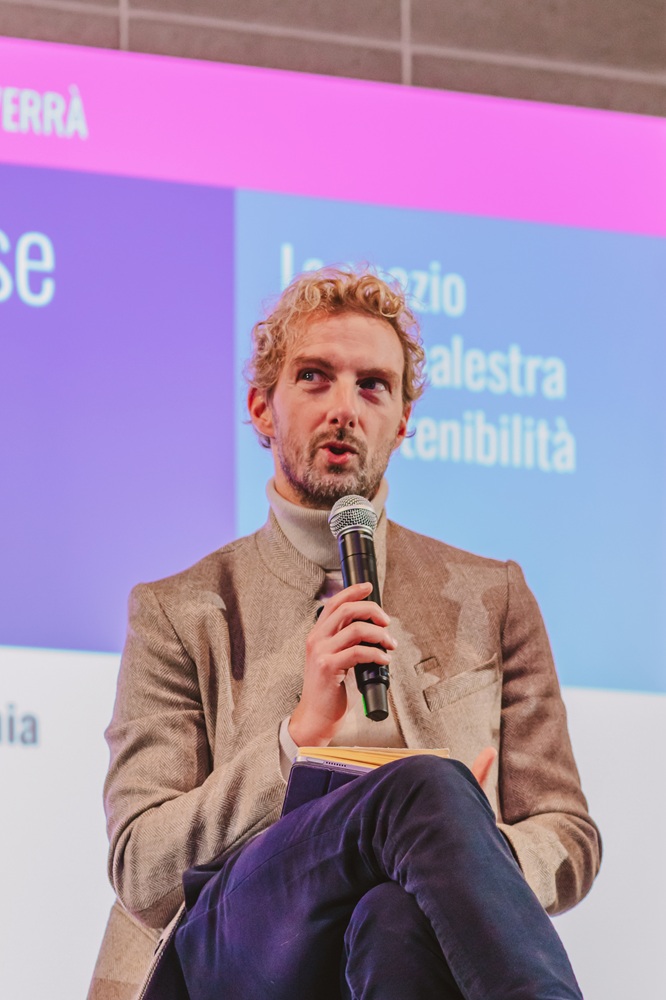
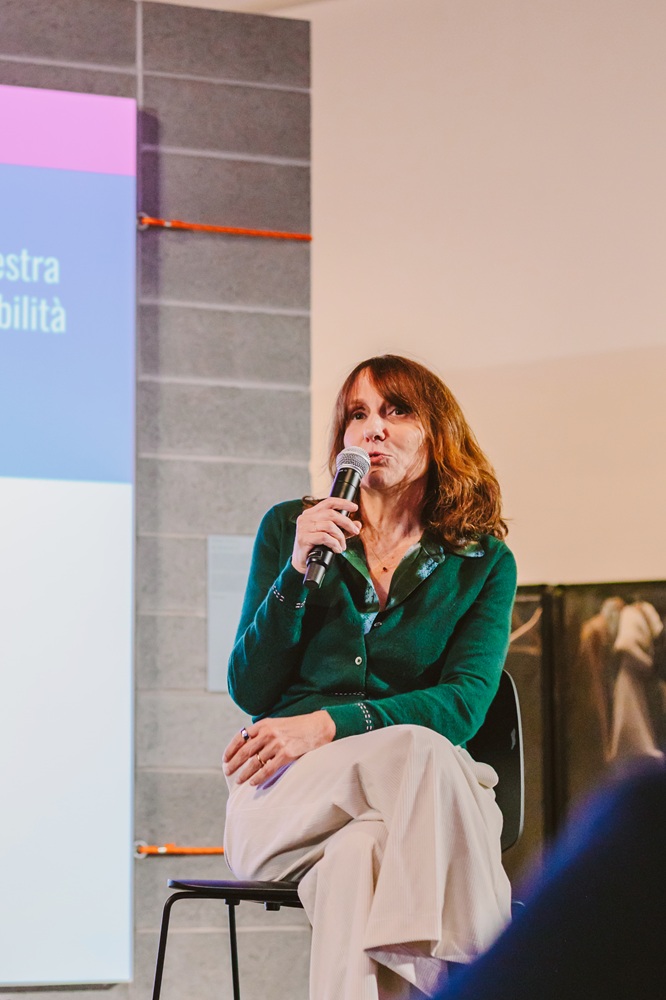
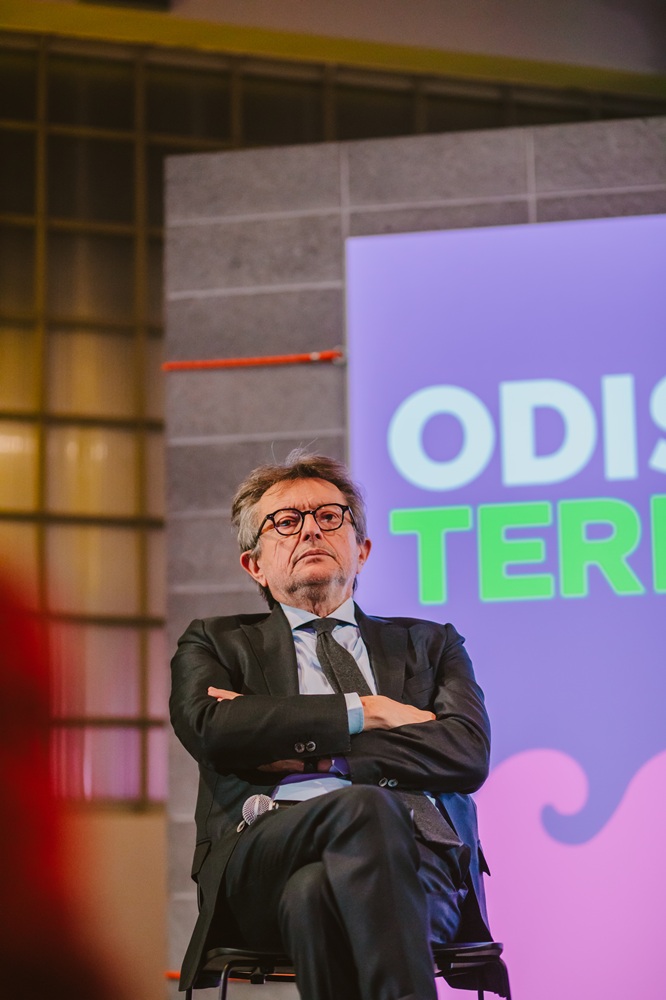
Held at gres art 671, the event featured contributions from Ersilia Vaudo, astrophysicist and Special Advisor on Future Talents at ESA (the European Space Agency), Alessandro D’Avenia, writer, scholar of Classical Literature and high school teacher, and Mario Calderini, Professor of Management for Sustainability and Impact at Politecnico di Milano. The discussion was moderated by Massimo Sideri, columnist for Corriere della Sera.
Space exploration, historically tied to the demonstration of technological superiority, is increasingly shifting toward scientific research aimed at understanding how the principles learned in space can be applied to sustainability on Earth.
Massimo Sideri opened the conversation by describing space as an “incredible training ground for sustainability.” Faced with scarcity – or sometimes complete absence – of resources, astronauts have had to learn how to use every element in the most efficient way possible.
Alessandro D’Avenia brought the discussion back to the power of language, and in particular to nostalgia. Starting from the Greek etymology of nostos, he explained that the verb means “to save” in its active form and “to return” in its middle form, combining these meanings in a synthesis that runs through the entire Odyssey: “to the extent that I save, I return.” Nostalgia, therefore, is not a regressive feeling but a creative force, the deep tone of life when one recognizes it as a journey back to what saves us. It is a dominant and essential sentiment in the Odyssey, and in life itself.
In this perspective, D’Avenia recalled the image of Odysseus returning to Ithaca naked – a symbol of the need to strip away the identity forged in war, “a hypothesis of life from which nothing can be saved.” Return, he explained, is possible only through authentic bonds that recognize the individual as part of a social body – through relationship: “you are no longer anyone except through the relationship that recognizes you as such.” Odysseus is recognized not by heroic signs, but by those who belong to his most intimate world: the dog, the nurse, the son, the wife—witnesses of an emotional continuity that survives the passage of tim
For this reason, the writer suggested the need for a paideia of the cosmos, an education that helps us perceive how everything is interconnected, allowing us to move beyond the individualism that has dried out our relationships. The cosmos, unlike the modern idea of “environment,” is not a backdrop but a web of relations in which every gesture – of care or harm—echoes back onto our own body. A cosmic paideia, he argued, should help us “feel the real around us so deeply that we shed everything that prevents us from being in contact with it – so that if I caress or wound the real, it is my own body I caress or wound.”
He concluded by invoking the figure of Penelope, whose intelligence Homer considers equal or superior to that of Odysseus. Through the art of weaving, Penelope “
Ersilia Vaudo ha riportato il pubblico all’origine della coscienza ecologica, nata dalla prospettiva cosmica. Ha evocato la potenza delle immagini che hanno trasformato il nostro sguardo sul mondo: dalla celebre Earth Rise dell’Apollo 8, che ha ispirato la frase “Siamo venuti per scoprire la Luna, in realtà scopriamo la Terra”, alla sensazione di meraviglia e vulnerabilità provata davanti alla foto del Pale Blue Dot del Voyager 1, che ritrae nostro pianeta “sospeso in una notte eterna e separato da un sottile filo blu che è la nostra atmosfera… che è tutto ciò che ci separa da un vuoto soffocante”. Una consapevolezza amplificata dalle parole di Carl Sagan, che la descrivono come “l’unica casa che abbiamo mai avuto”.
In questo viaggio attraverso le prospettive cosmiche, l’astrofisica ha ricordato anche che, se oggi cerchiamo altrove tracce di vita, i luoghi più promettenti sono le lune d’acqua intorno a Saturno e Giove. “Sono dei veri e propri oceani racchiusi dentro gusci di ghiaccio,” ha spiegato, “con un cuore metallico, un’attività idrotermica”. Acqua liquida, calore, minerali: le stesse condizioni che sulla Terra, sul fondo degli oceani, hanno favorito la nascita della vita. Da questo sguardo su mondi oceanici lontani, Vaudo ha tracciato un legame con il senso di finitudine e con l’illusione dell’antropocentrismo: “noi siamo tutti polvere di stelle”. Il materiale che ci compone proviene dal cuore delle stelle; gli stessi nuclei di idrogeno sono stati forgiati nei primi tre minuti dopo il Big Bang.
“We carry the universe within us, and we are part of the universe—and finitude is part of the game.”
She reminded us that the day will come—far in the future—when the Sun will die, expand into a red giant, and engulf Mercury, Venus, and Earth; and the day when Andromeda will merge with the Milky Way in a vast cosmic embrace. Yet, she argued, it is precisely this awareness that should inspire in us a deep sense of freedom, and above all, responsibility for the gift of life and our planet.
Vaudo also turned attention to humanity’s return to the Moon and the prospect of staying there long-term, emphasizing how this goal is already reproducing political and geopolitical divisions: “we are returning to the Moon to stay—but to stay divided.” On one side, China and Russia with the countries aligned with their programs; on the other, Europe, Japan, Canada, and the United States
A dynamic that contrasts sharply with the spirit of the past, when the International Space Station represented “a true exercise of peace, bringing together Europe, Russia, the United States, Japan, and Canada.” Today, lunar exploration seems to be moving forward without a shared human project, echoing in space the fractures we experience on Earth.
Mario Calderini ha focalizzato la sua riflessione sui valori che l’umanità deve ridefinire prima di abitare altri mondi. Attraverso una metafora ha illustrato come la nostra società sia sbilanciata: ” if tomorrow morning you go to the Tokyo fish market, everyone can tell you exactly to the penny how much a dead whale is worth. But does anyone know how much a live whale is worth? “. It is the image of a distortion revealing how poorly we care for the planet. Bringing this logic into space, he warned, risks replicating elsewhere the very errors that have undermined well-being on Earth.
Calderini highlighted a “deeply concerning dissonance” between the original values of space exploration – public, visionary, knowledge-driven – and its current trajectory, increasingly shaped by economic interests. Hence the suspicion of “removal”: the temptation to look to space as a distraction from earthly problems, many of which are caused by the same financial logics now driving the conquest of new worlds. We risk, he argued, “seeking adventures in space to divert attention from the problems we have on Earth, problems perhaps caused precisely by that distorted capitalist system now seeking profit in space exploration.” A reflection that calls for questioning not only what we take into space, but what space can return to us in terms of awareness.

He also urged us to consider that surviving on the Moon – an environment hostile and extremely resource-poor—requires frugal technologies compatible with strict constraints. Quoting economist Dick Nelson, he recalled the question posed 50 years ago: “Now that we’ve been to the Moon, can we also solve the problem of the ghetto?” The ghetto, here, being the metaphor for society’s deepest challenges. Fifty years later, the answer remains no: inequalities have not diminished; they have grown. And while technology advances, its social impact remains uneven, worsening vulnerabilities linked to climate change.
The most dramatic paradox, he concluded, is that those who are poorest, least educated, and most exposed to environmental risks are today the most opposed to sustainability policies – because we have failed to show the social dividend of either the green transition or technological innovation. To reverse course, we must rebuild trust and, above all, “rediscover a love for complexity,” because only by accepting the complexity of problems – and rejecting simplistic solutions – can we imagine a sustainable future on Earth and beyond.
The Odissea Terra series will continue, in the hope that “sharing routes” will help us interpret sustainability beyond abstraction and find pathways that unite us—guiding us as navigators rather than castaways.