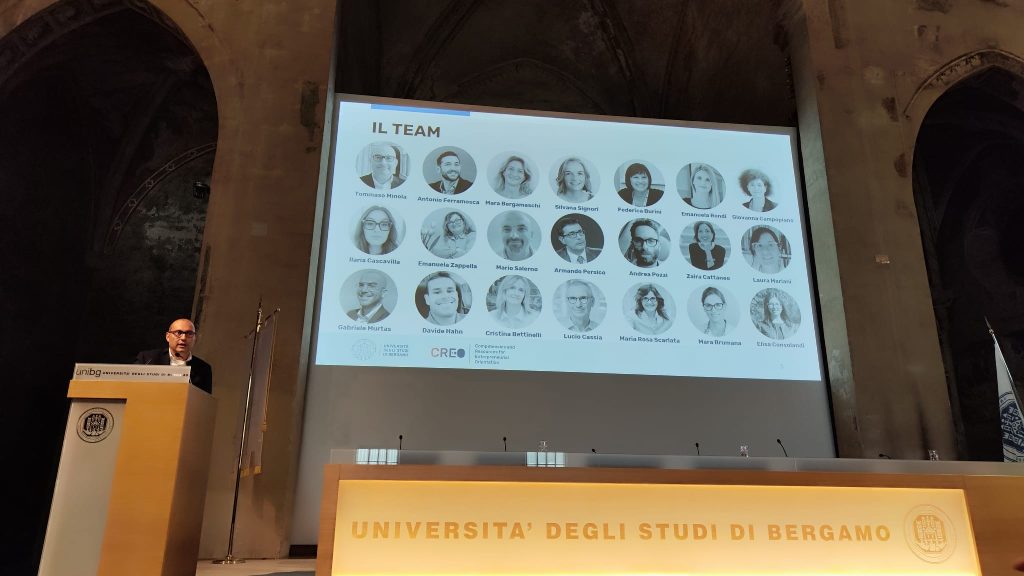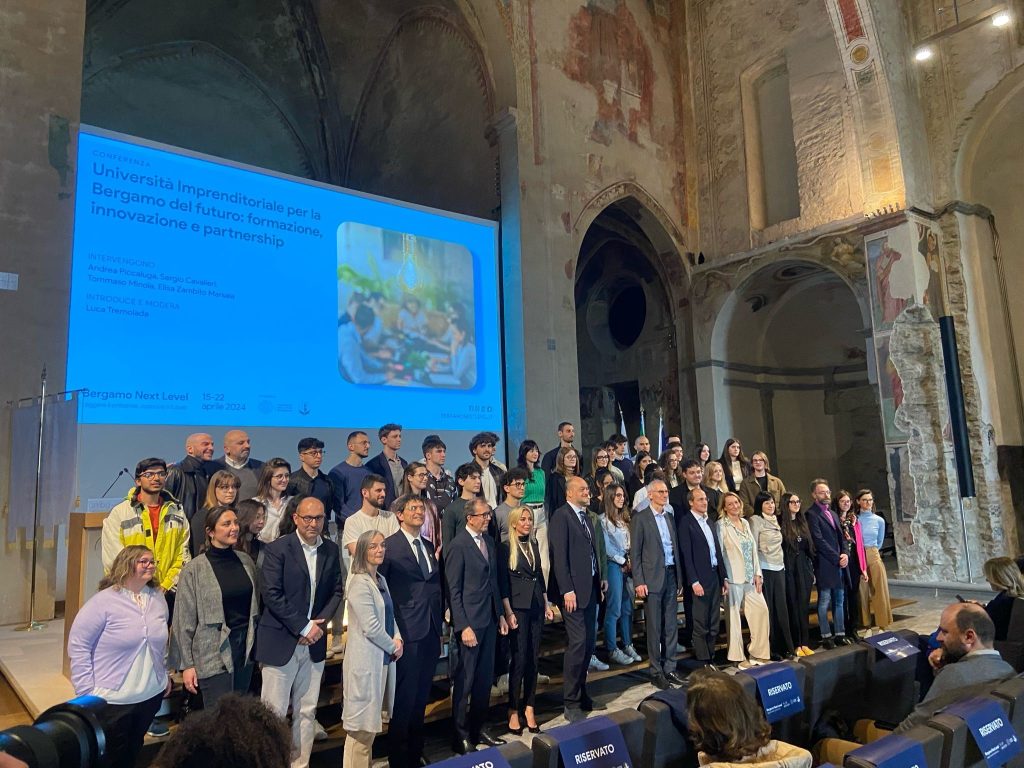
The University of Bergamo presented CREO – Competencies and Resources for Entrepreneurial Orientation – the new academic and entrepreneurial training course that was created with the aim of promoting students’ personal growth, creativity and capacity for innovation, involving faculty and researchers and the local innovation ecosystem (investors, companies, organizations).
A range of experiences – including courses, workshops, events and competitions – that promote a method and mental approach, providing tools to train resourcefulness, teamwork, adaptability and a sense of responsibility. All initiatives designed to challenge oneself, discovering and cultivating one’s talents, leadership, ‘problem solving’ skills, working by objectives and in teams.
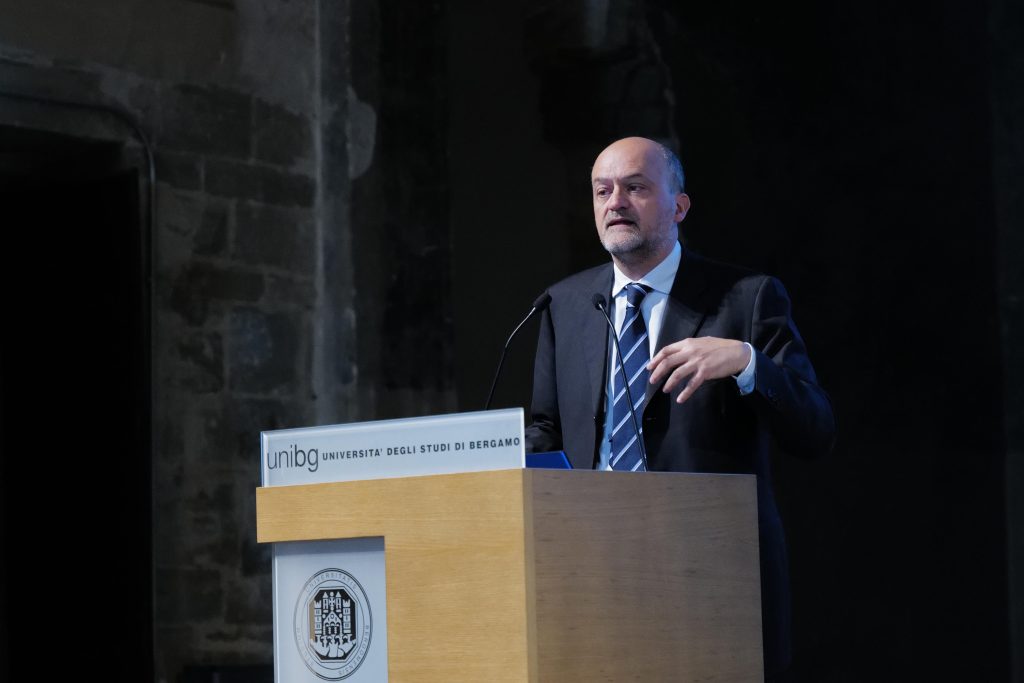
“Born in the wake of the path traced by Bergamo 2035, the very fruit of the collaboration between the University of Bergamo and the Fondazione Pesenti, CREO is a visionary but at the same time extremely concrete project that responds to two of the main challenges of our time,” comments Carlo Pesenti, President of Fondazione Pesenti Ets. “On the one hand, to place alongside traditional courses innovative training paths aimed at enhancing people’s potential, identifying the talents of each individual and cultivating in girls and boys relational and transversal skills, which are increasingly important and in demand at work. On the other hand, to create bridges and connections between worlds that are deeply interconnected but often still too far apart, such as the university, the territory and companies, but also and above all between people, in order to achieve more and more ambitious goals together, for the benefit of both individuals and the community.”
UniBG is among the first state universities in Italy to introduce an articulated entrepreneurial educational proposal with thematic insights with which students of all disciplines can personalize their course of study. CREO is aimed at UniBG students from all master’s degree programs, enrolled in master’s degrees or the last two years of a single-cycle degree: from engineers to economists, from lawyers to humanists. The project starts with an initial offering of 18 educational proposals divided into courses, workshops, events and competitions that promote resourcefulness, adaptability and leadership. But from year to year the opportunities are renewed, with the addition of new modules, at the suggestion of teachers or actors in the innovative ecosystem, both national and local.