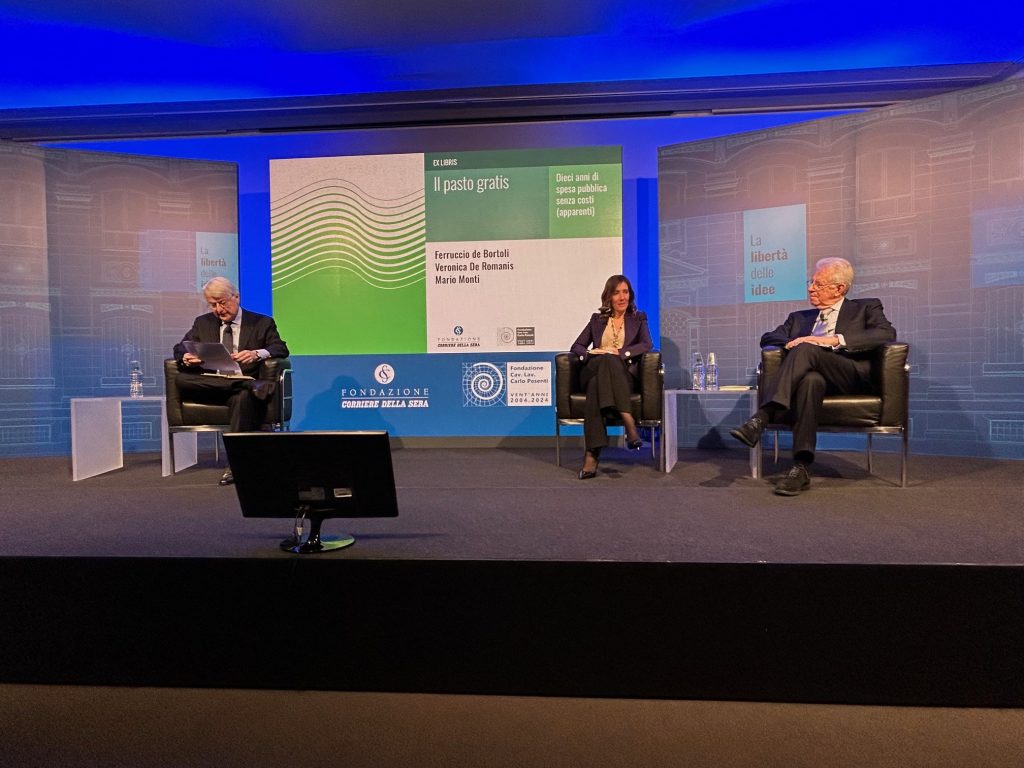
The meeting The Free Meal. Ten years of public spending without (apparent) cost, was held in Milan, organized as part of the Fondazione Pesenti Ets‘s collaboration with Fondazione Corriere della Sera.
The meeting was opened by Ferruccio de Bortoli, President of Fondazione Corriere della Sera, who recalled how the proclamation ‘for free’ has characterized the work of many Governments, with a long work of financial diseducation.
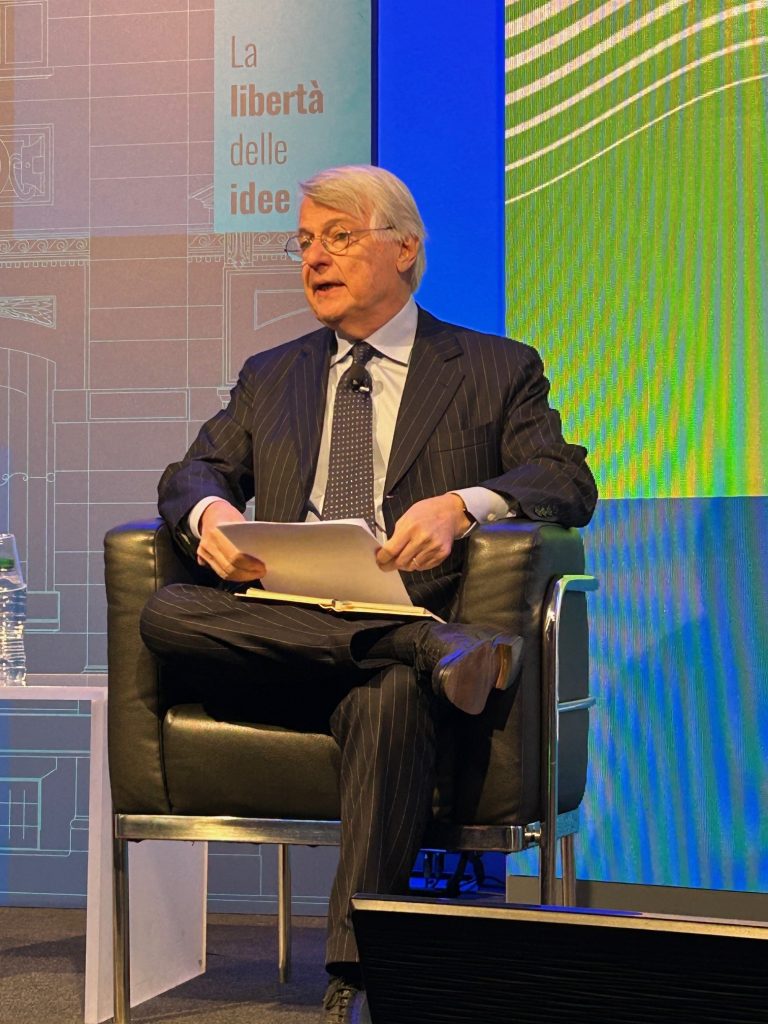
Ferruccio de Bortoli
“Prof. Veronica De Romanis has played and plays a role as an activator of civic consciousness, not hesitating even to go against the current. And this is really important considering the consequences of our actions on future generations as well,” highlighted Mario Monti. “There is a tendency to forget an important aspect of interventions such as the super bonus under its distributional profiles. Beyond the issues of budgetary aggravation and beyond the possible impact on growth, it is a reverse wealth tax on the house, a measure that is not progressive but regressive, which has basically led to a valorization of the real estate assets of the beneficiaries.”
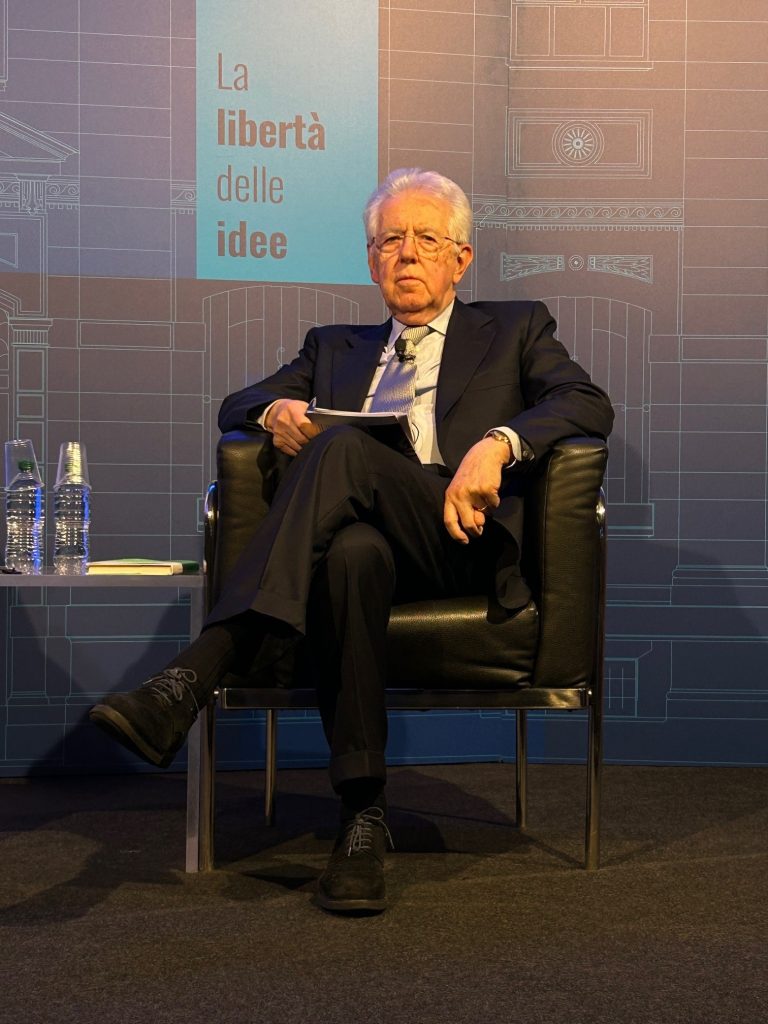
Mario Monti
Author Veronica De Romanis pointed out that the short-sighted and irresponsible trend of securing electoral consensus by promising “free meals” threatens the future of the younger generations and, in the long run, democracy itself, pointing out that there are no solutions without sacrifice and that economic illusions, once dispelled, give way to harsh realities.
“The national debt is like a crack you have on your windshield, you can drive for months but then all it takes is a pebble to make everything come crashing down,” he warned “I would start with a figure from this morning, which proves precisely what I wrote as the last sentence of the book, which is that free meals do not exist: this morning ISTAT told us that our deficit for last year, that is, the difference between revenues minus expenditures, is at 7.4 %. In the previous document (prepared about 3 months ago) the deficit was estimated at 5 %, and in the one before that (1 year ago) it was estimated at 3 %. The government is not in time to make estimates, that these are exceeded, and the 110% bonus debt continues to grow. But the real issue is that the basic idea was to create a parallel fiscal currency circulating in the economy, minted not by a central bank, but by citizens. This is the 110% bonus. A new way of looking at the economy. Today’s figure really drives home the point.”
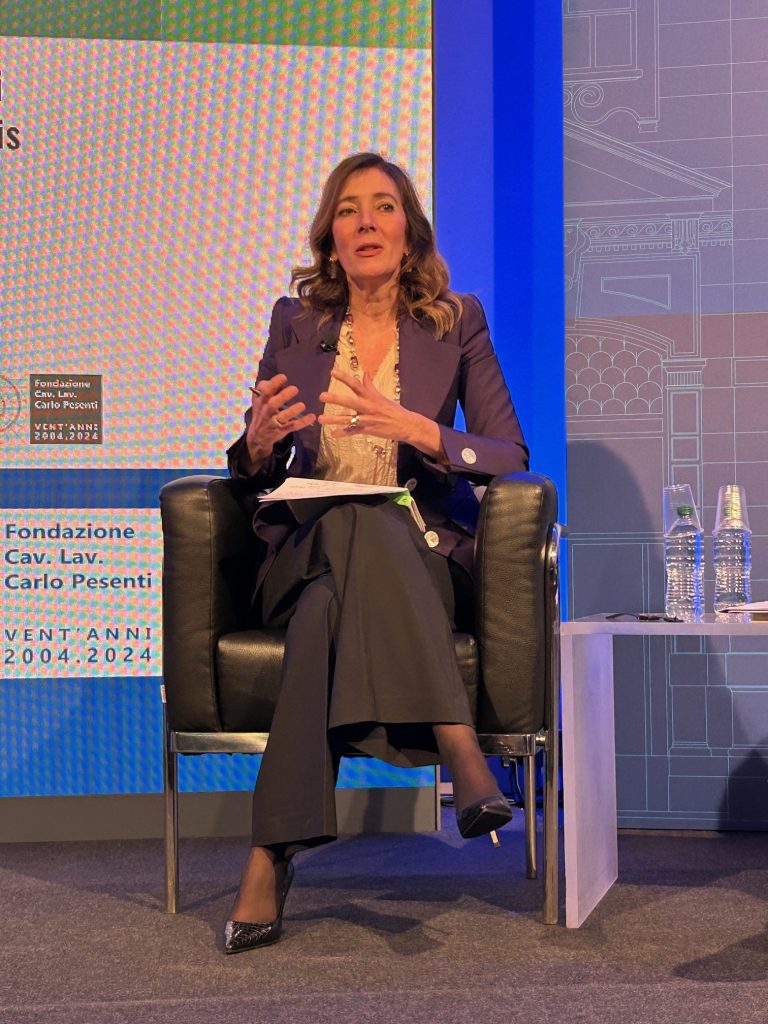
Veronica De Romanis
The book The Free Meal, on which the meeting was based, analyzes Italy’s political and economic evolution since 2011, when the spread crisis led to the formation of the “government of professors” led by Mario Monti. This executive adopted austerity measures, such as cuts and increases in the tax burden, which stabilized public accounts but proved unpopular. Successive administrations, while different in composition and agenda, share the goal of ending austerity by proposing debt-financed liberal spending policies presented to the public as cost-free. This narrative, attractive but misleading, becomes a bipartisan vice, promising immediate benefits without considering the consequences for the public debt, a burden even for Italian citizens.
REWATCH THE LIVE
INSIGHTS