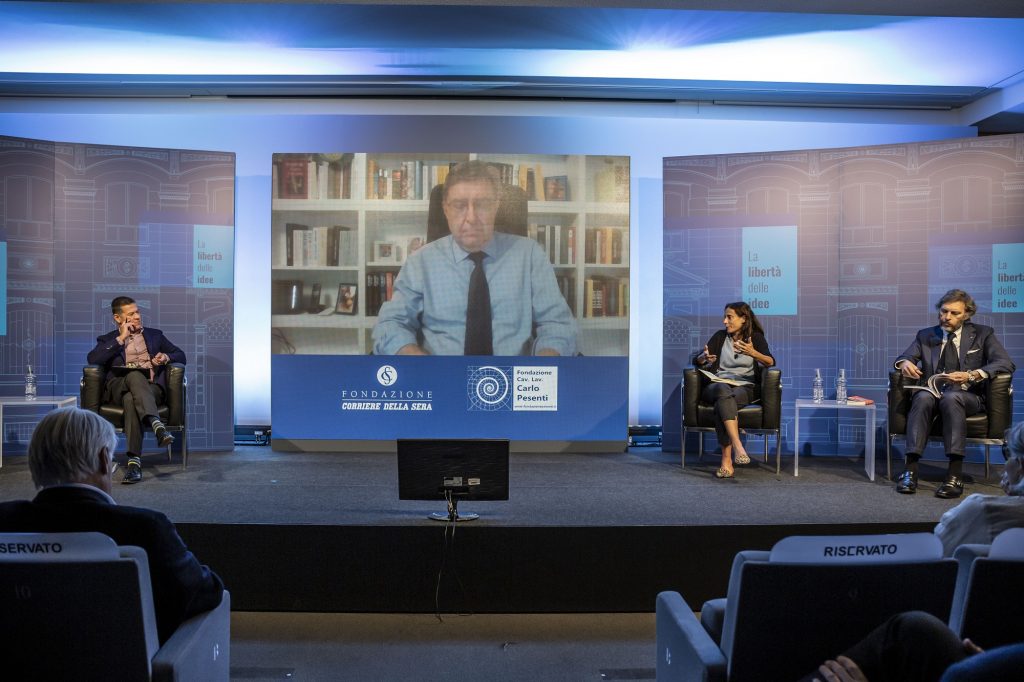
It was a sold out event “Fuori dal tunnel. L’Europa può vincere la sfida della transizione ecologica? ” ,the conference organized by Fondazione Corriere della Sera and Fondazione Pesenti held at Sala Buzzati of Corriere della Sera.
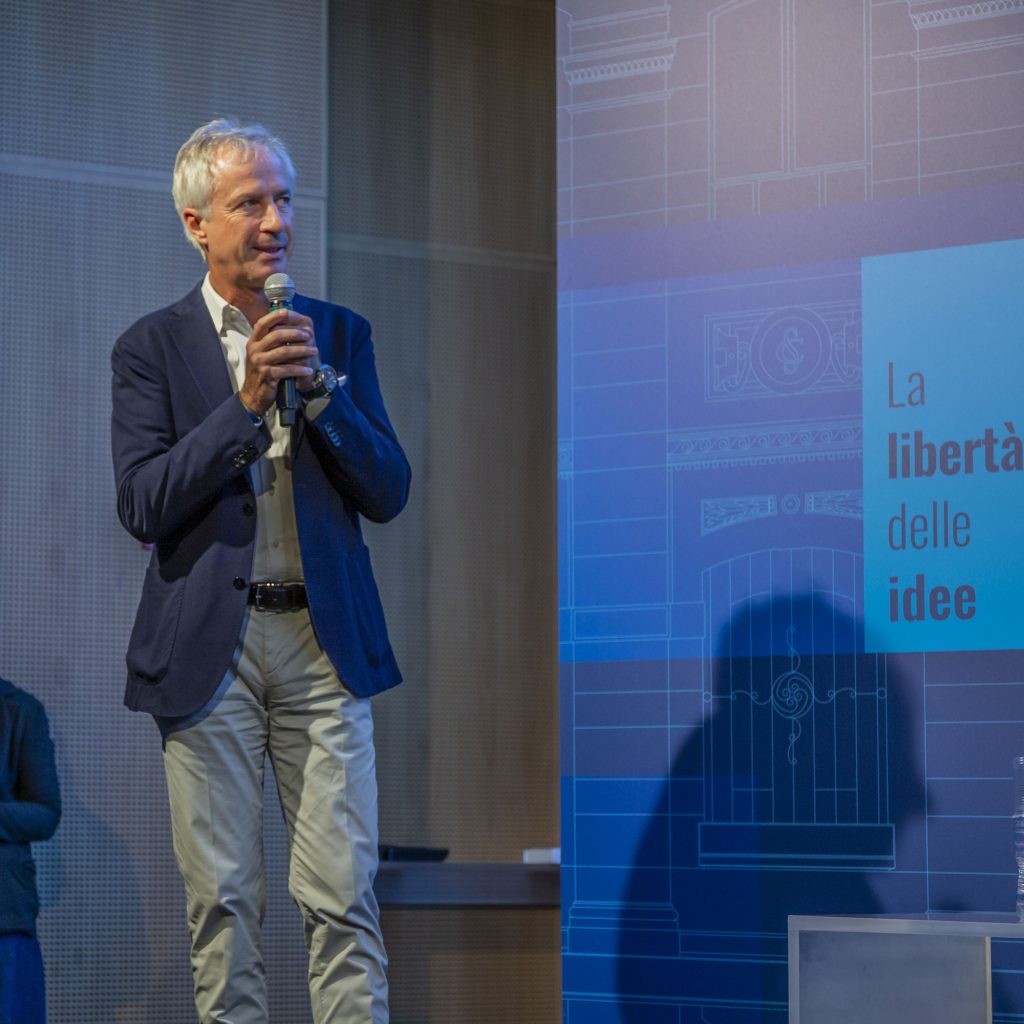
The meeting was opened by Ferruccio de Bortoli, President of Fondazione Corriere della Sera, who welcomed the audience and recalled the long-standing collaboration with Fondazione Pesenti. He emphasized that their joint mission is to foster reflection and create opportunities to examine developments in our society.
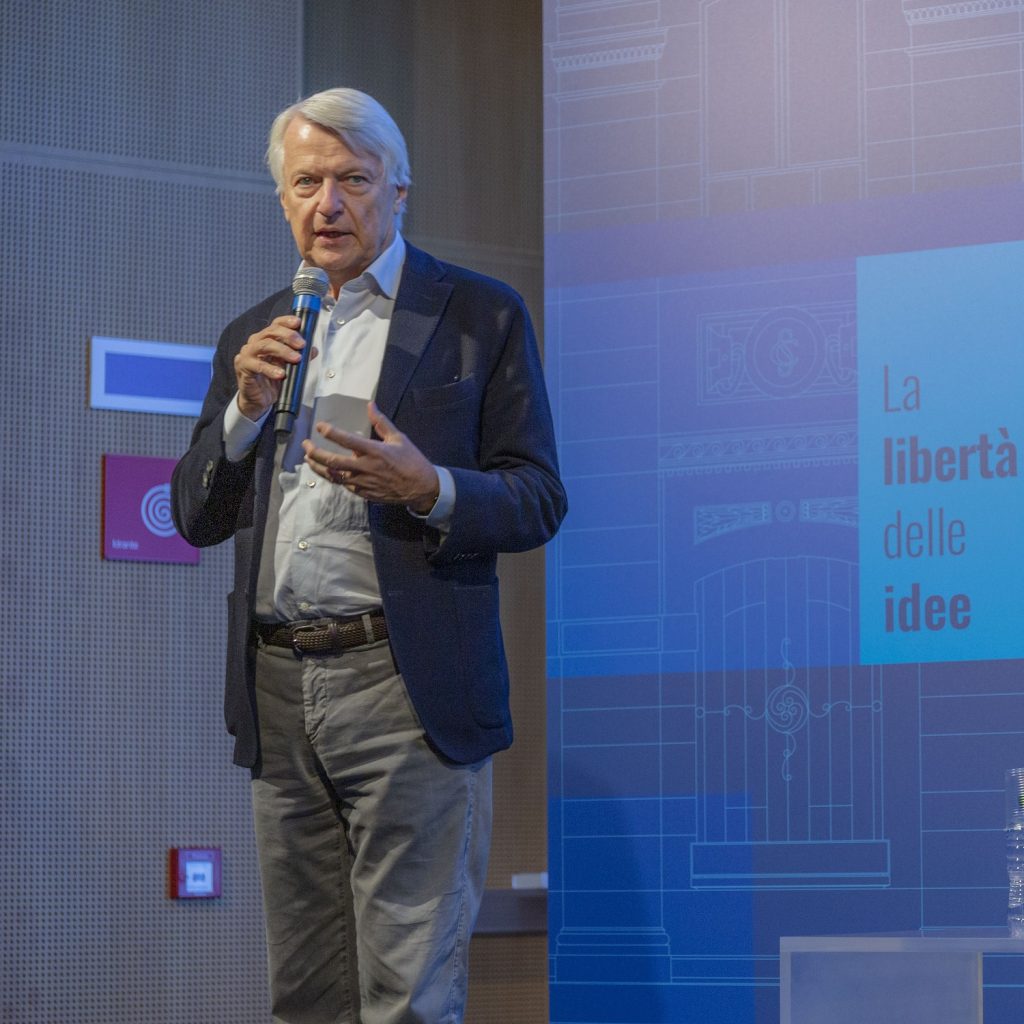
Next, Carlo Pesenti took the floor: “Sustainability has been one of the founding pillars of our foundation since 2004, along with our commitment to supporting younger generations through education and research. This year, we renewed our partnerships with Bocconi University and Politecnico di Milano to provide deserving students the opportunity to attend the Master’s program in Transformative Sustainability.”
 |
 |
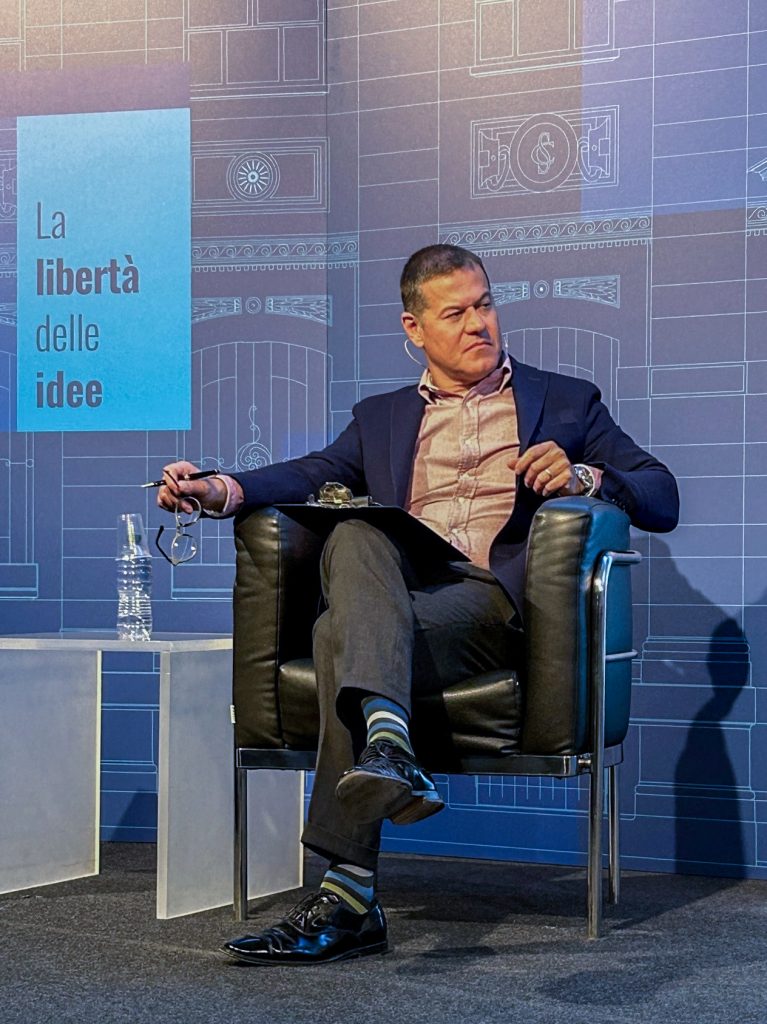
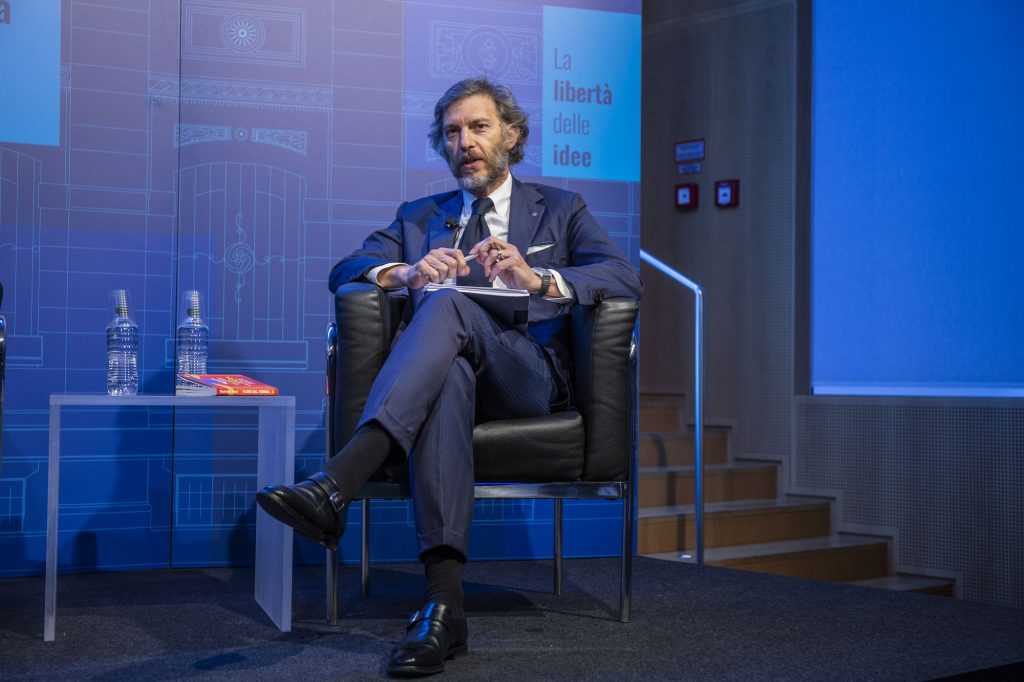
Massimo Sideri, columnist for Corriere della Sera, introduced the discussion by framing the political and social context: “We’ve often discussed ecological transition, innovation, sustainability, technology, and science—essential tools for achieving a green transition. But today, we add the European and geopolitical dimension. We are in a time of deep international reflection. Since the war in Ukraine, talk of a slowdown in globalization has intensified. Two poles are emerging: Asia (especially China) and the United States. Europe finds itself in the middle.” He then handed the floor over to the speakers in the room, quoting the phrase by Jean Monnet that opens the book:“Europe will be forged in crises and will be the sum of the solutions adopted to address those crises.”
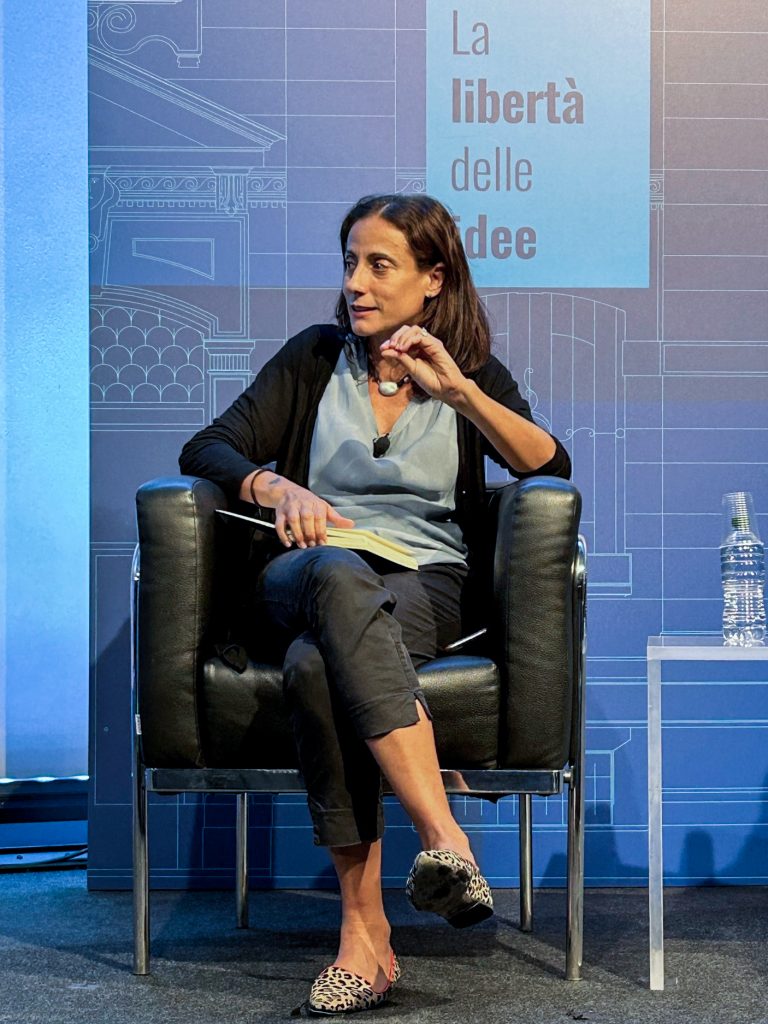
“This (green) transition will happen. Period.” Nathalie TocciNathalie Tocci, Director of the Istituto Affari Internazionali, Honorary Professor at the University of Tübingen, and Professor at the School of Transnational Governance at the European University Institute, was direct in her message: “The Green Deal gave Europe a new story to tell—a strategic vision, an economic roadmap, and a way to connect with younger generations. The pandemic and the war in Ukraine have, for the first time, been used to accelerate this path—triggering a legislative agenda and unlocking funds.” She then posed a crucial question: “In the face of prolonged crises—like climate change and the economic challenge from China—which don’t demand immediate responses, can Europe go beyond Monnet’s logic?Act even without being pushed to the wall?”
 |
 |
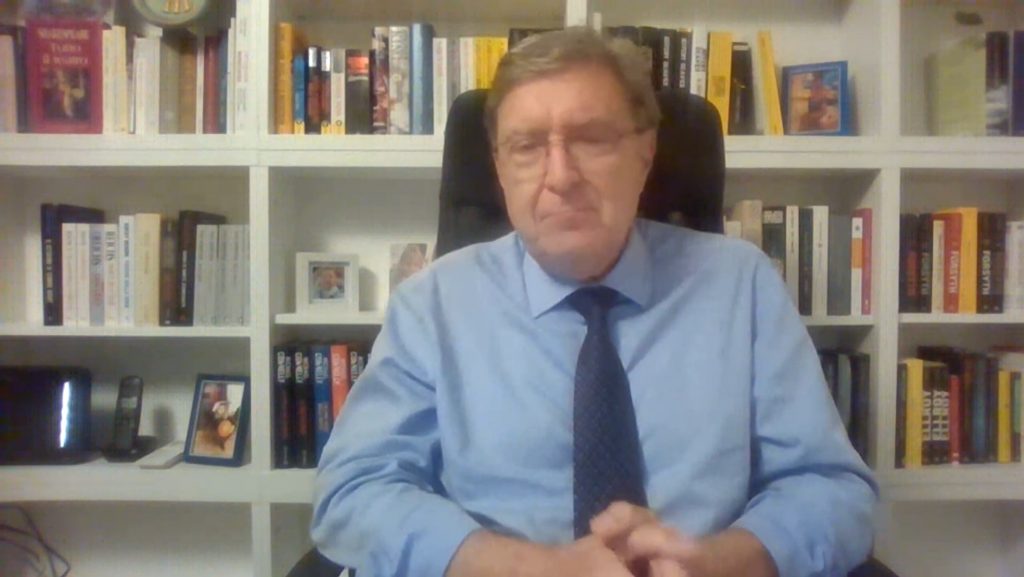
“The ecological transition is a great opportunity, and for this reason, it comes with costs. When we discuss the costs of the ecological transition,” emphasized Enrico Giovannini, Full Professor of Statistics and Sustainable Development at the University of Rome Tor Vergata, and co-founder and Scientific Director of the Italian Alliance for Sustainable Development,
“we often forget the 300,000 premature deaths caused by pollution each year in Europe. But that’s not all — the ecological transition is a necessary operation, a path of development and growth, now even demanded by entrepreneurs themselves. It is a lever for competitiveness, development, and employment. Of course, we need to implement the right policies to ensure that the most vulnerable don’t bear the brunt.”
Francesco Perrini, Associate Dean for Sustainability at SDA Bocconi School of Management, closed the event with a clear message: “Let’s stop talking about costs. These are investments. Those who start first will be ahead of the game. We need to make our economy more competitive, and the first step is to invest in new technologies — which we’ll be able to export tomorrow at lower costs, fueling a virtuous cycle. The climate crisis is a global issue. Everyone will have to contribute, and Europe is already moving forward. That’s why it’s both important and realistic to develop a long-term vision to 2030.” And he concluded: “I consider myself a techno-optimist: technologies will help save the world — but we’ll also need an industrial transformation and investment in new skills. This green transition could become a huge opportunity for today’s youth. At the SDA Bocconi Observatory, we’re already seeing strong demand for sustainability and innovation professionals.”
 |
 |
REWATCH THE LIVE
INSIGHTS