From the intellectual provocation of the RIFO project to a training path that enhances the skills of the University of Bergamo.
The first Master’s degree in Geourbanistics has been launched, strongly supported by the Rector of the University of Bergamo. From the RIFO project – Urban Regeneration and Land Restoration – comes an important new challenge for the University.
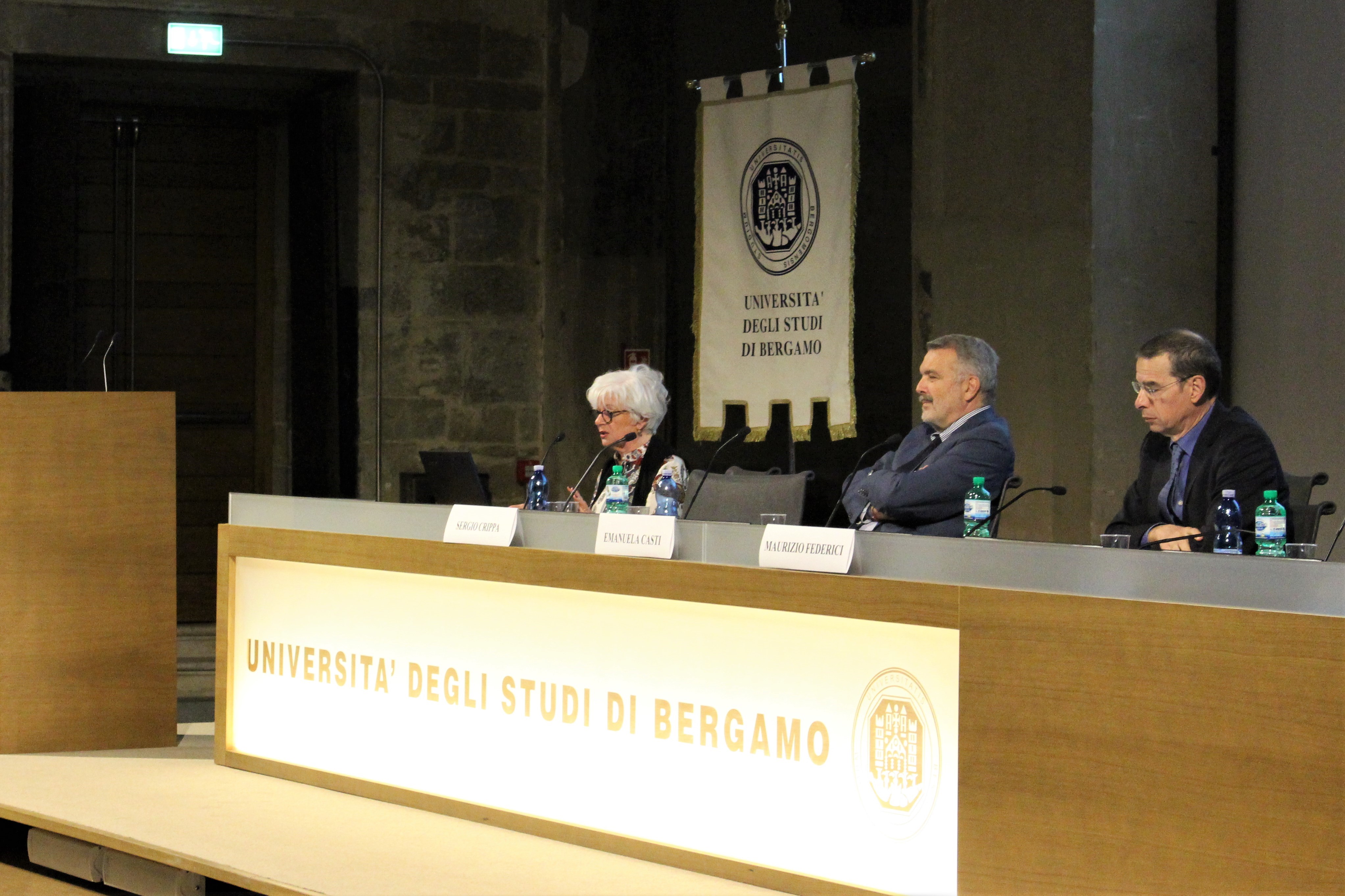
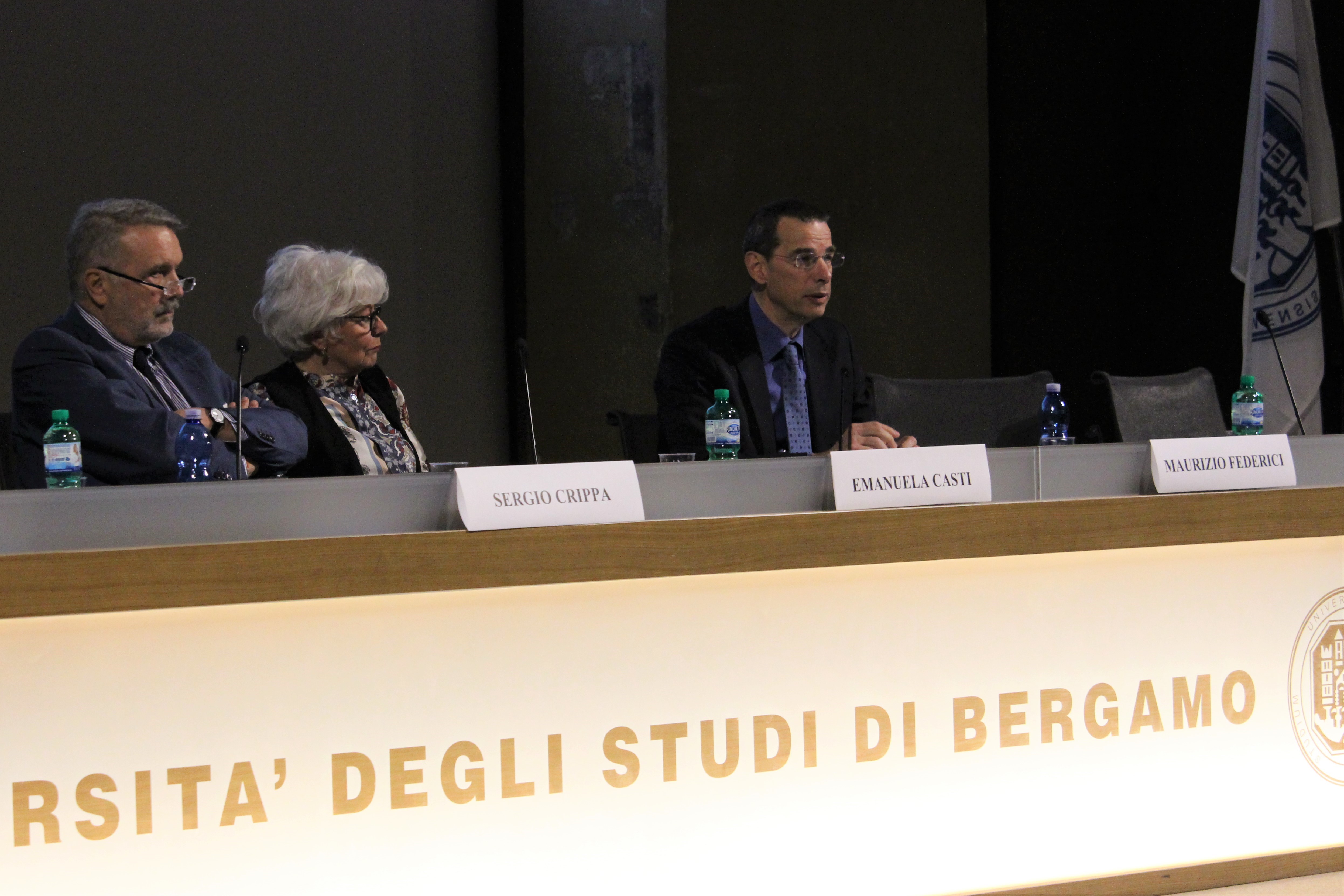
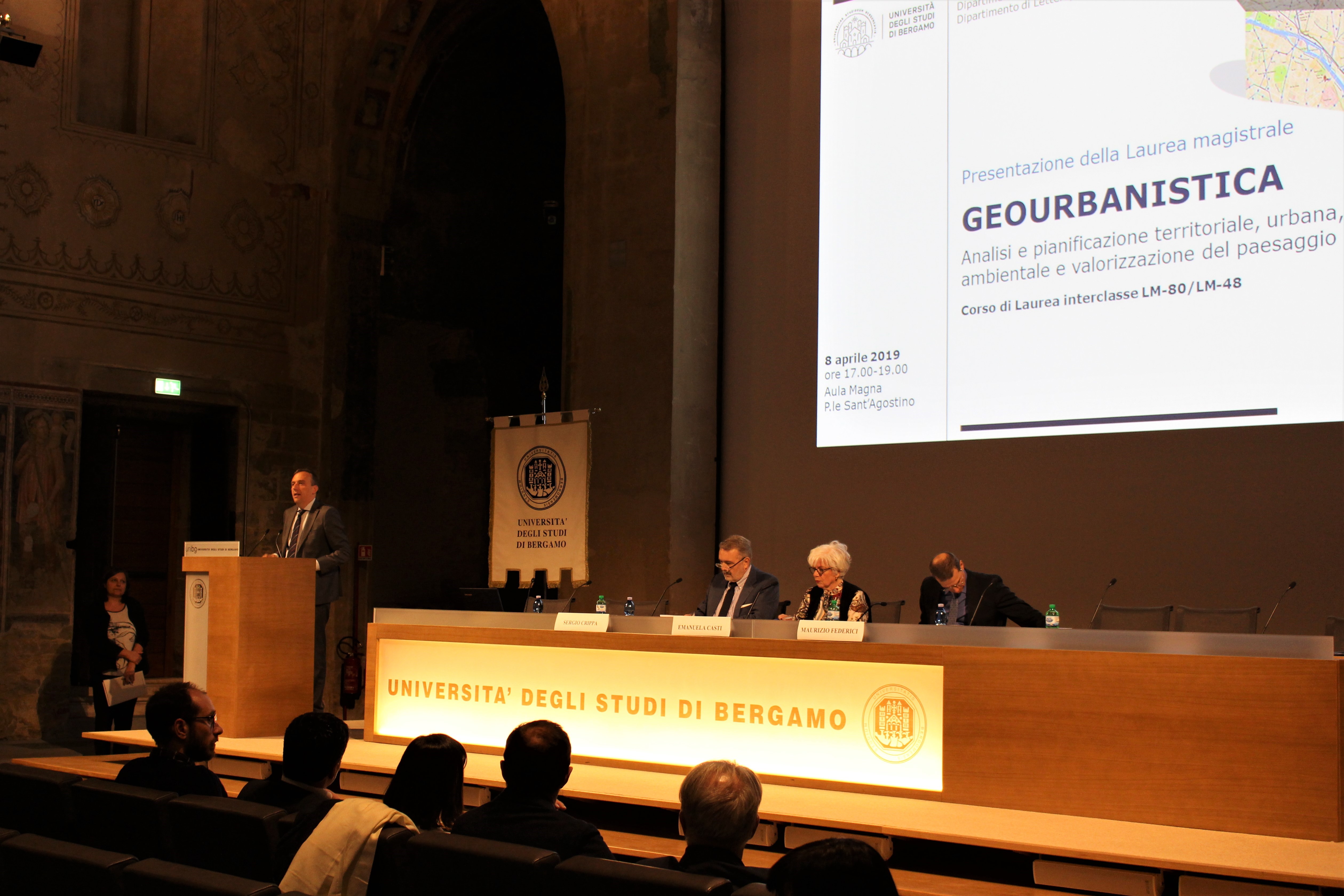
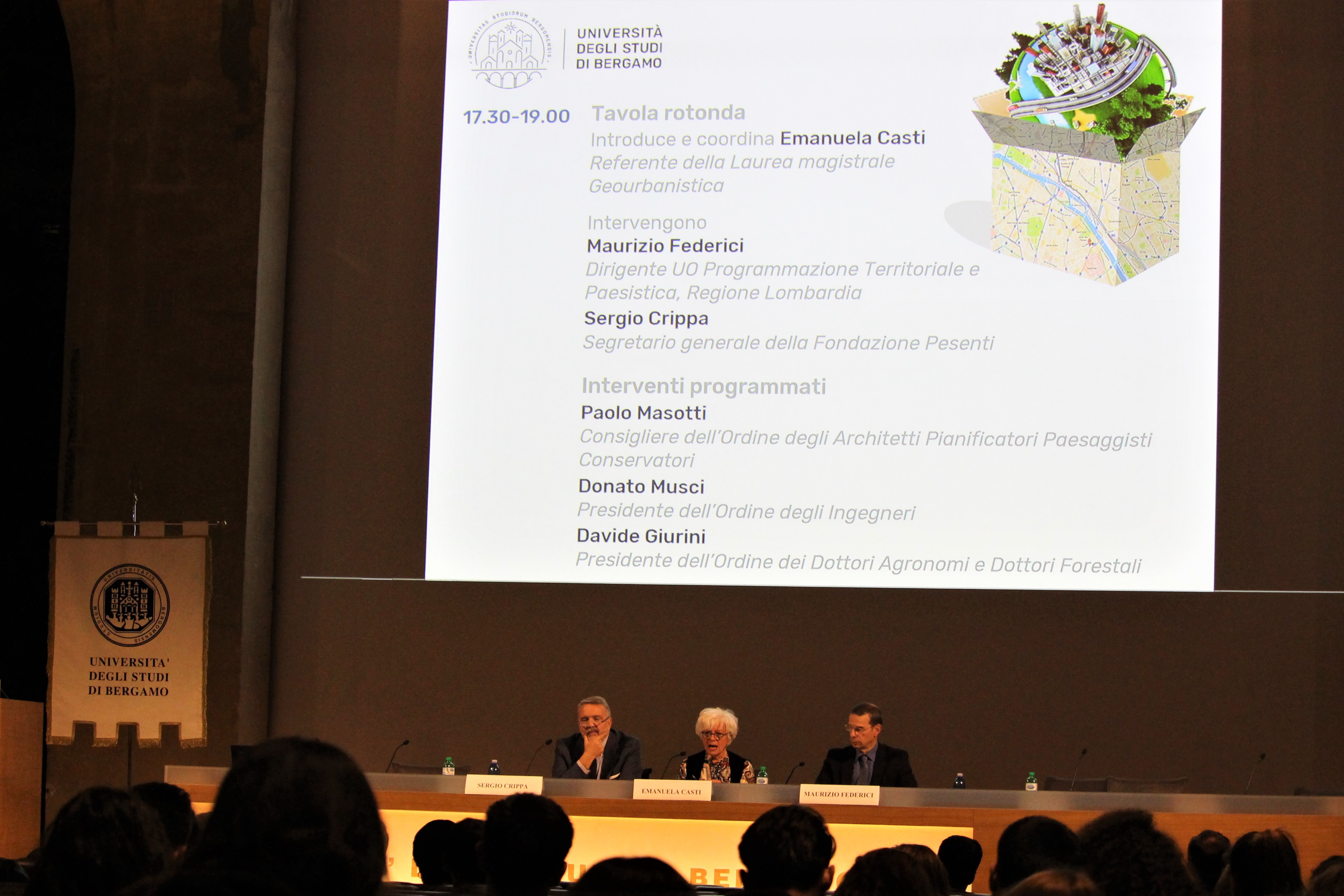
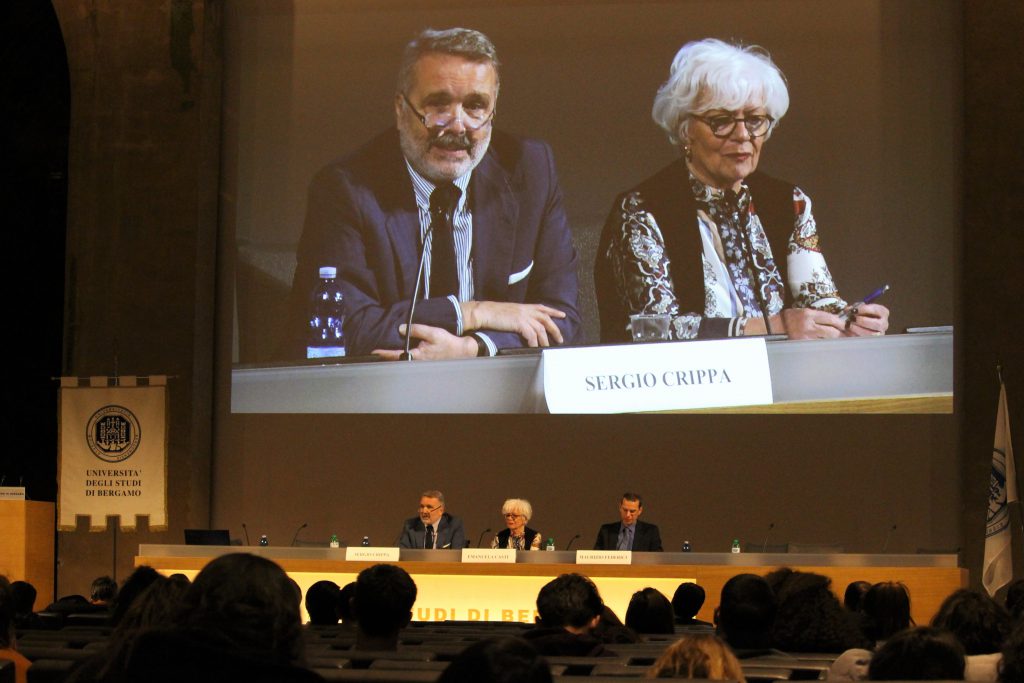
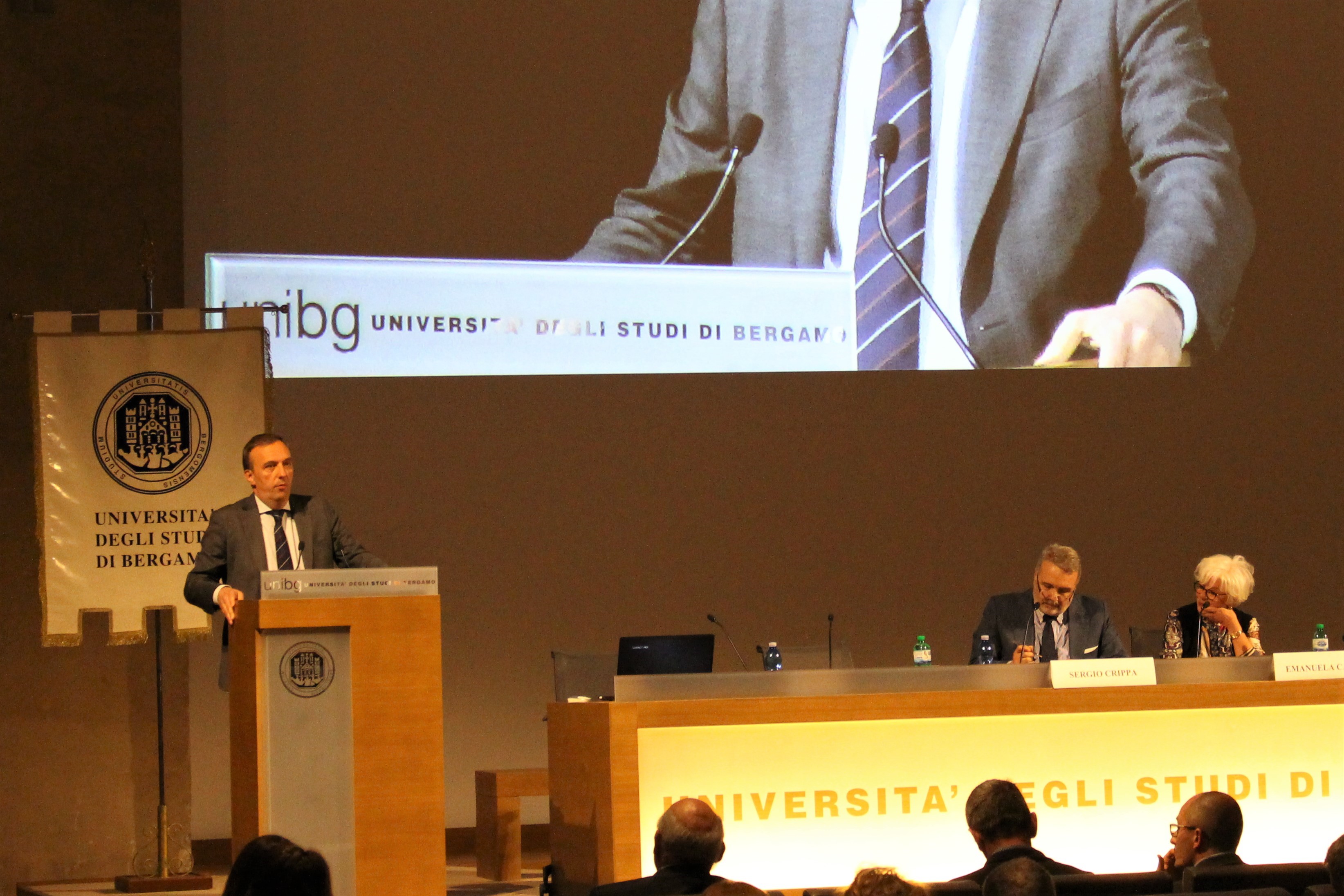
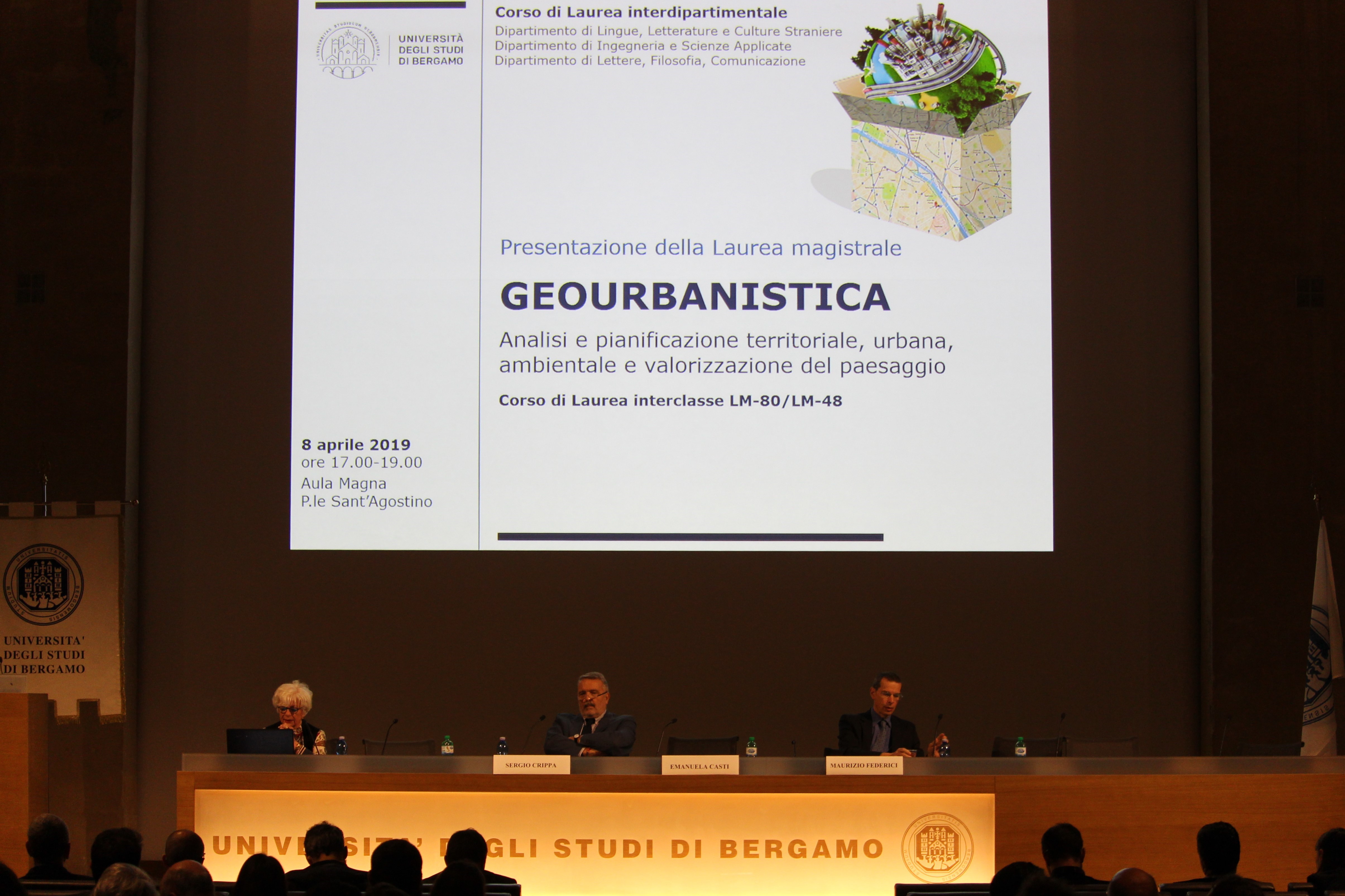
The official presentation of the first interdepartmental Master’s degree course in Geourbanistics was held at the University of Bergamo in the presence of Rector Remo Morzenti Pellegrini, Professor Emanuela Casti, Sergio Crippa (Secretary General of Fondazione Pesenti), Maurizio Federici from the Lombardy Region, and key stakeholders from the region and the university.
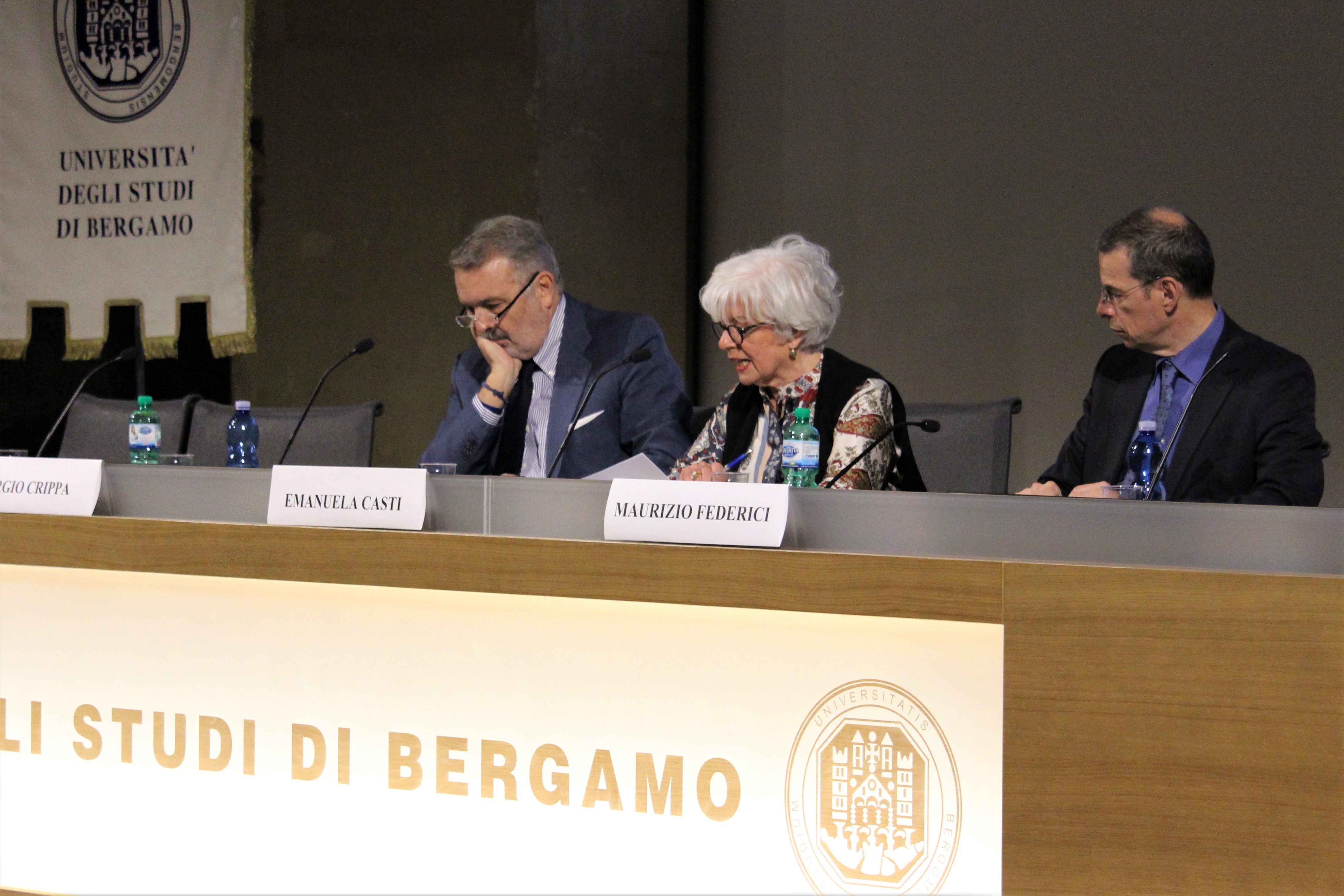
By joining the Steering Committee of the new program, the Secretary General of Fondazione Pesenti took the opportunity to recall the origins of RIFO, an initiative launched jointly by the University of Bergamo and Fondazione Pesenti. Its name is inspired by what children say when they want to express both regret for something done and hope for what’s to come: “Rifo!” — “I start over”, with the confidence that it can be done better.
“It was,” Sergio Crippa recalled, “an intellectual provocation, but also a meaningful initiative. Because when we’re faced with a mission impossible, as a Foundation we like to turn to the university world to try and make it possible.”
This led to a project carried out within the framework of the Center for Territorial Studies, CST–DiathesisLab, the research and cartographic experimentation lab of the University of Bergamo, coordinated by Emanuela Casti. A team of eight researchers (mostly geographers, but also urban planners and IT specialists) and three students completed the RIFO, research over a period of about two years starting in mid-2013, studying disused and obsolete spaces in Lombardy. The aim was to design a path by which this vast building stock, once regenerated, could meet the need for affordable housing and support the restitution of consumed land
It is from this background and from “specific expertise on urban regeneration that already existed within the University and needed to be recognized,” as Professor Casti emphasized, that the Master’s degree in Geourbanistics was born. It features interdisciplinary teaching offered by faculty members from three departments (Languages, Engineering, and Humanities), and makes use of laboratories and research centers at the University of Bergamo.
The program aims to train a professional figure that does not yet exist in Italy but already exists abroad: a geographer–urban planner with skills in both territorial analysis and urban planning, as well as expertise in geographic information systems, mapping technologies, and communication tools to support governance.
The need and opportunity to train such a professional figure in Italy stems from recent international scientific and political guidelines, which point to the intersection of disciplines as the only effective way to address contemporary challenges such as environmental degradation and land consumption.
The program is open to students holding a bachelor’s degree in humanities/social sciences or in scientific/technological fields. This diversity is seen as a strength, and is managed through alignment courses, forming the basis for a student-oriented teaching approach. The course is delivered in a stimulating environment that includes project work, interactive activities applied to real territories, labs, internships, and courses taught by visiting international professors and national experts.
For this reason, the degree is also aimed at professionals working in agencies and institutions involved in environmental restoration and urban design, within the framework of university–workplace training partnerships. From a career perspective, graduates in Geourbanistics will find opportunities not only in public and private bodies focused on territorial planning, but also in new roles that bridge technical experts and stakeholders – politicians, administrators, citizens – to promote participation and effective governance.
To ensure the degree program remains aligned with the evolving needs of the territory, a Steering Committee composed of faculty and local stakeholders will meet regularly to review the course content and exchange ideas, also involving international experts.