Vittoria’s experience: from Albino (Bergamo, Italy) to Petershagen, Germany for a year with Intercultura and with the support of Fondazione Pesenti.
My relationship with my host family
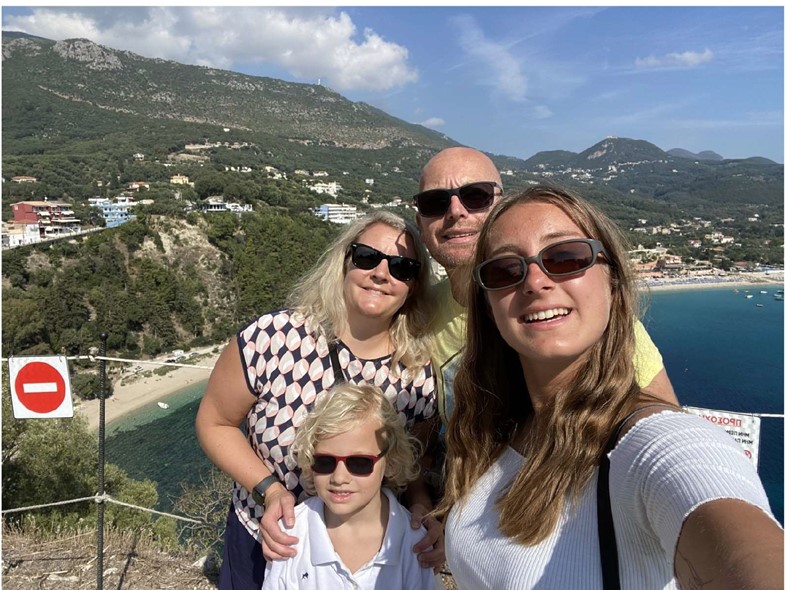
My host family consists of a mom, a dad, and an eight-year-old little brother. We live in a large house in a small rural village, surrounded by fields, less than a 15-minute drive from Minden, the nearest town. Even though this is their first time hosting a student, they immediately made me feel at home: they understand how I feel and what I’m going through, which is why they often give me space and always make me feel free to choose whether to spend time with them or take some moments for myself.
That said, I really enjoy doing things together. During the week we have school, work, and other commitments, so dinner is the time of day we come together — to share stories from the day, plan the next, or simply chat and joke. Dinner time has a great atmosphere; I feel truly free and happy to talk about what I experienced at school or in the afternoon — what was new, what I didn’t understand. On weekends, we often plan activities together: walks, visits to grandparents or uncles and aunts, and sometimes even overnight stays!
My relationship with the local community and friends
Since this is a small village, it’s quite unusual for people to meet an exchange student from Italy, so when I talk to people who don’t know me and they notice my accent isn’t German, I always get a lot of curious questions about my home country, my decision to spend a year studying in Germany, my thoughts on school, new traditions, and my host family.
Everyone is always kind and tries to understand me, even though I often make mistakes when speaking. Still, they’re usually surprised I can speak some German, and I often get helpful tips on how to improve. As for friendships, I was warmly welcomed at school from day one: I’m never alone during breaks, someone always wants to sit with me, talk, or show me photos of German food, traditional festivals, or share playlists with local music.
My academic experience: school performance and relationships
Right now, it’s still quite difficult to fully understand everything being explained in class because of the language, but every day is a chance to learn new words that help with the next lesson. The teachers are very understanding and take into account that German isn’t my mother tongue, especially during tests. They also understand that in subjects like chemistry, physics, and math, the topics taught here are often different from what’s taught in Italy — sometimes I’m missing the “basics” to follow along. Despite this, I’m working hard to catch up and be able to fully engage in class.
Luckily, my school has a “tutor” — a teacher responsible for international exchanges — so I always turn to them when I need help.
My free time
I’m doing things I never imagined doing back in Italy — like taking walks or bike rides, both because of a lack of time and, I’ll admit, a bit of laziness… These two activities are very popular in Germany: walking for hours with no specific destination, just following a path or road, or biking, which is the most loved means of transport here. I’ve come to appreciate all this too — it’s a great way to explore the country, admire the rural landscapes, and clear your mind during the challenging moments of being an exchange student.
Starting in December, I’ll join the “Volleyball AG.” Many schools offer afternoon clubs — these can be sports-related, theatrical, medical, or tech-focused — and the one I chose involves volleyball training with students from different classes once a week.
What has stood out to me in this country — both positive and negative
Student independence: School here is built on the expectation that students take responsibility for managing their own studies and time. The same goes for how parents treat their children — they’re not as hands-on as in Italy, and kids are expected to be aware of their responsibilities.
Adults’ free time: In Germany, adults don’t only focus on family and work — it’s important to have leisure time too. Whether it’s relaxing on the couch watching TV or doing sports or creative courses (even continuing education through “Volkshochschule”), personal time is valued.
Ci sono lunghe distese di campi, alternate a gruppi di case dai mattoni rossi o di legno, con giardini ben curati, e le piste ciclabili sono davvero ben mantenute.
There are wide stretches of fields, interspersed with clusters of red-brick or wooden houses with well-kept gardens, and the bike paths are truly well maintained.
In Germany, it’s legal to buy beer and wine from the age of 16. However, most clubs require minors to bring a signed permission form from their parents. So, buying a bottle of wine at lunch is no problem, but getting into a club without an adult and written consent is out of the question!
Three words to describe my experience so far (and why I chose them)
CHANGE: I’ve discovered a side of myself I never would have known if I had stayed in my comfort zone. I still have a lot to learn, but I’ve already discovered so much about myself in just a short time.
INDEPENDENCE: I’ve learned to manage my time, my goals, and especially my emotions. I’ve learned to understand what makes me feel good or bad, and I’m learning how to stay balanced in different situations — sometimes without anyone’s help.
THINKING ABOUT THE FUTURE: I’ve never set goals for myself or thought about the future as much as I’m doing now here in Germany.
Anecdotes / Open Comment
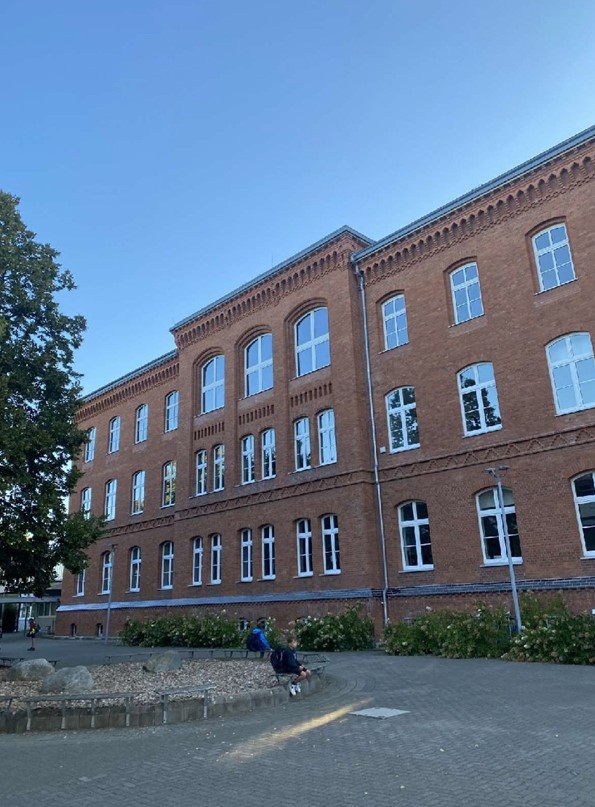
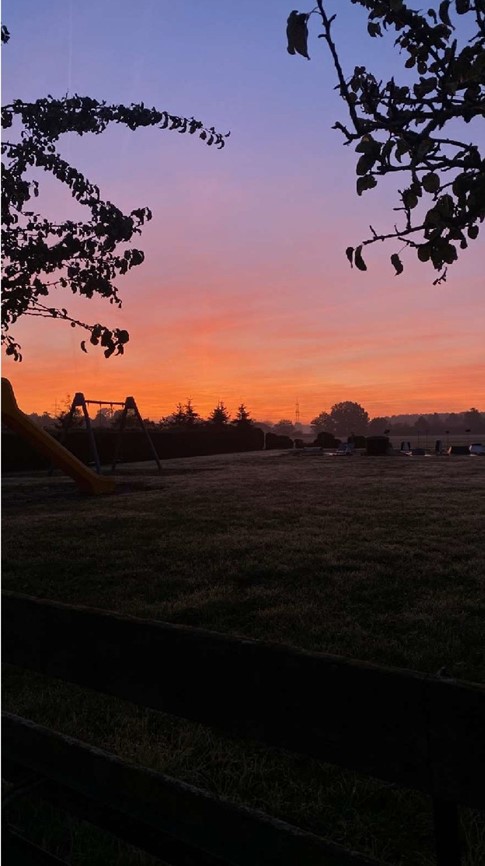
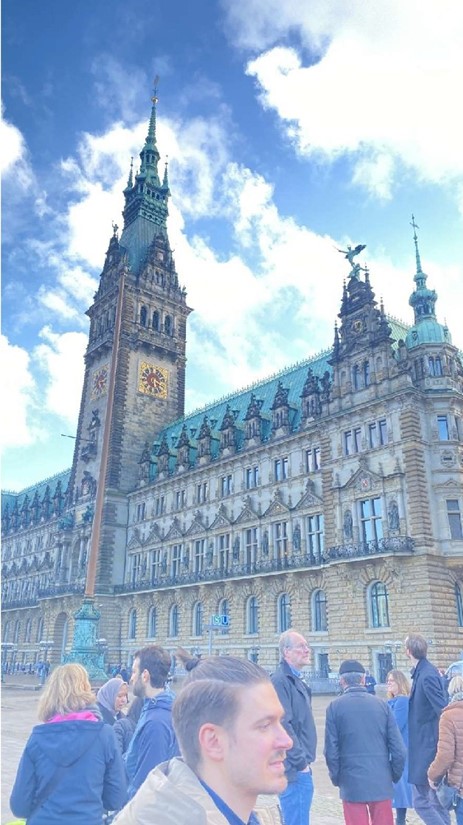
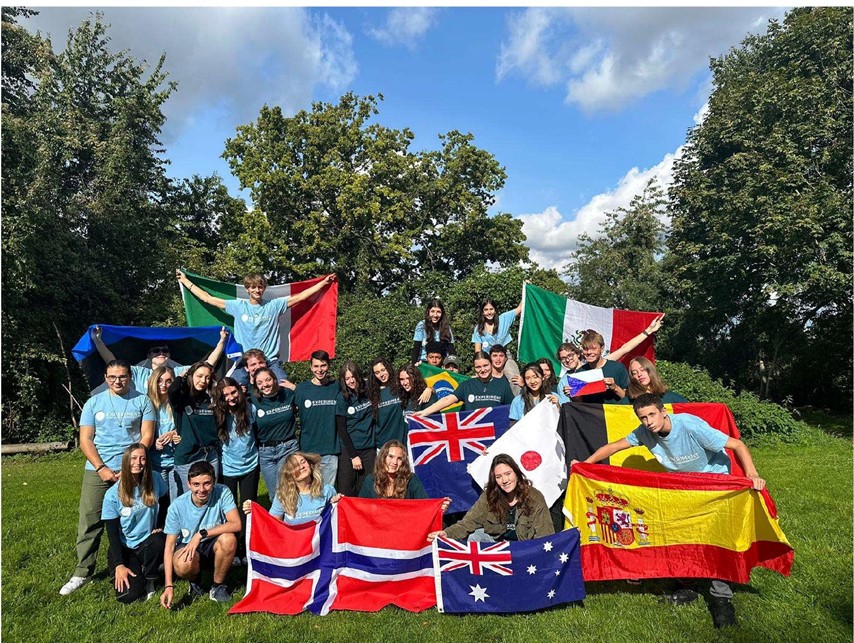
*photo caption* 1. Staatliches Gymnasium Petershagen, my school 2. Me and my host family on holiday 3. Dawn from Südfelde, my hometown 4. Hamburger athaus. 5. With other exchange students in Colonia 6. Me during a boat tour in Amburgo.