
The event “In Conversation with ChatGPT”, organized by Fondazione Pesenti and Fondazione Corriere della Sera and broadcast live on the Corriere.it website, drew great interest.
Introduced by Carlo Pesenti, President of the Pesenti Foundation, and moderated by journalist Massimo Sideri, the conference featured several prominent guests who explained the functioning, potential, and risks of the Chat Generative Pre-trained Transformer (hence the acronym ChatGPT), developed by OpenAI and specialized in human-AI conversation.
 |
 |
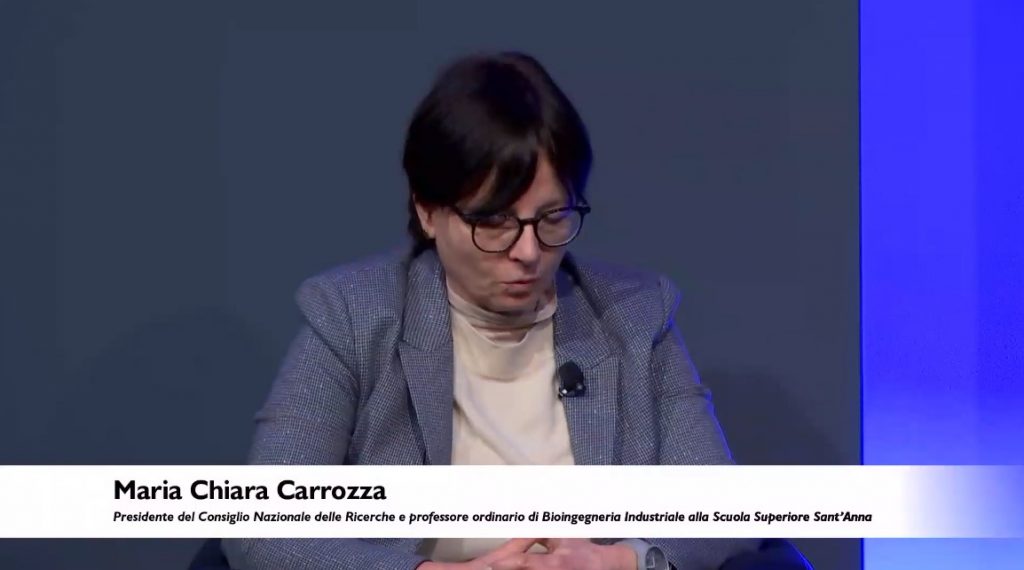
The first speaker was Maria Chiara Carrozza, President of the National Research Council and Full Professor of Industrial Bioengineering at the Sant’Anna School of Advanced Studies.“It is important to ask ourselves what artificial intelligence is for. We need to consider whether these tools will help humanity progress, whether AI will impact all our lives, and what the extreme consequences of automating cognitive activity might be—something quite different from the automation of physical activity that robots have brought into factories. Factory automation helped eliminate repetitive and exhausting tasks; cognitive AI, on the other hand, affects what is most human about us: creativity ”.
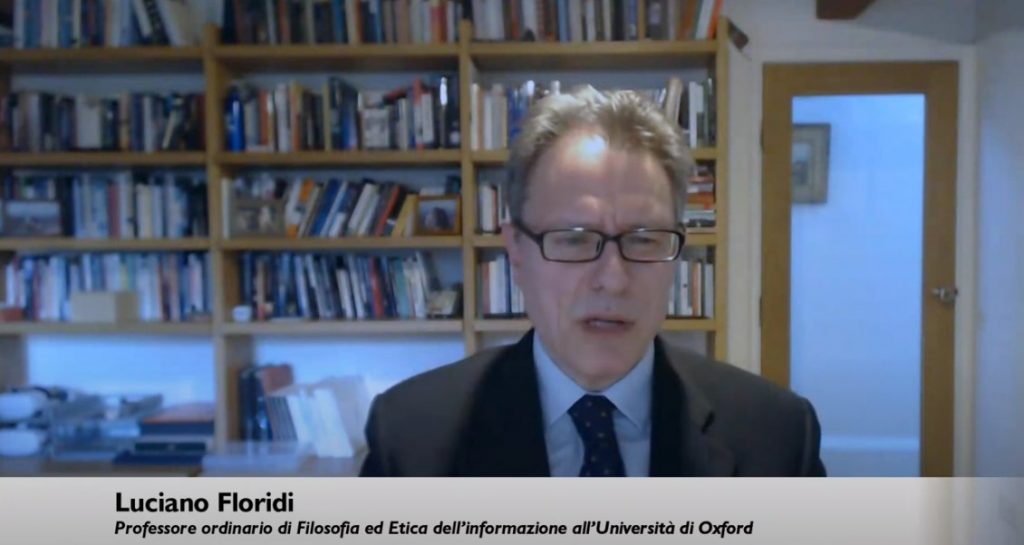
Luciano Floridi, Professor of Philosophy and Ethics of Information at the University of Oxford, emphasized the importance of understanding how these systems work, also in terms of best exploiting their potential: “By interacting with ChatGPT, its limitations become clear—but they are interesting limitations. The system generates content through purely syntactic and probabilistic elements by analyzing vast amounts of data. It lacks understanding, intelligence, or semantic competence, yet the result is still extraordinary. In today’s world, which moves far faster than in the past, AIs could serve as an interface between us and accumulated knowledge. However, we must also be aware of the gap this creates between us and that knowledge, which, over time, could become a critical issue. In conclusion, today’s AIs are merely tools—how we use them is our responsibility, and a huge one at that. Because those who control the questions control the answers, and those who control the answers control reality ”.
 |
 |
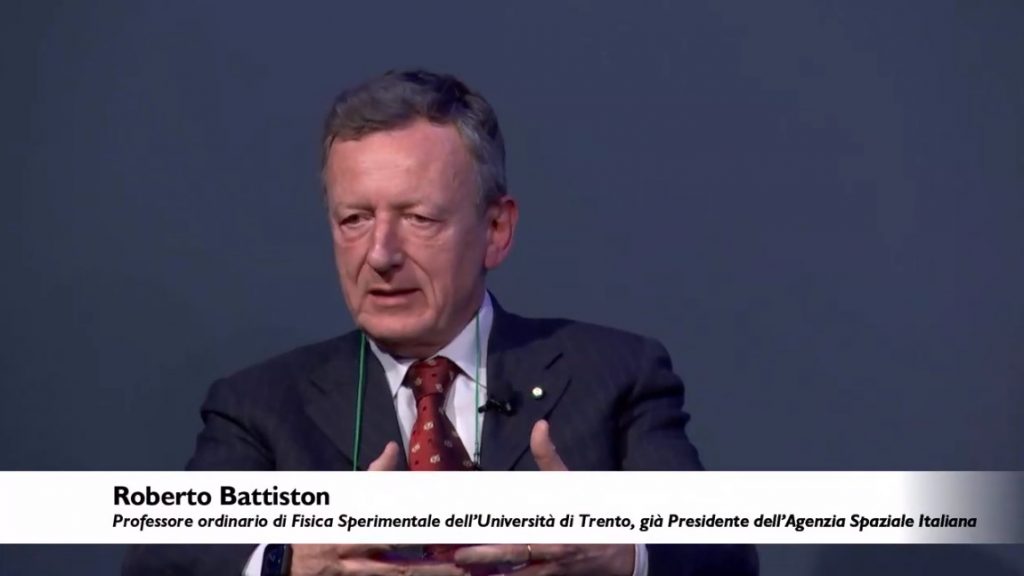
Roberto Battiston, Full Professor of Experimental Physics at the University of Trento and former President of the Italian Space Agency, added “ChatGPT creates the extraordinary illusion of conversing with a human being—it’s an irresistible illusion to think it’s like us. But we must understand that we are simply dealing with a machine and make the effort to comprehend it. We need to know, for example, that the system does not copy, but generates new text. It applies a purely probabilistic algorithm to combine the information available online—our collective intelligence—to create something new. It’s an effective way of indexing a set of sentences we’ve written and turning it into something that is linguistically brilliant, but not necessarily correct—the information it gives us can be completely wrong, because it is the result of mere probabilistic combination. Asking targeted questions reveals this.
Another important point is that ChatGPT’s output is filtered—the earlier versions had weak filters, which led to ethical problems. It has since been refined and programmed to deliver acceptable results. But who decides what is acceptable? Who programs the system? For what purpose? This raises further ethical dilemmas. Currently, ethics is dictated by the market: what is inappropriate doesn’t sell. But who knows what the future holds ”.
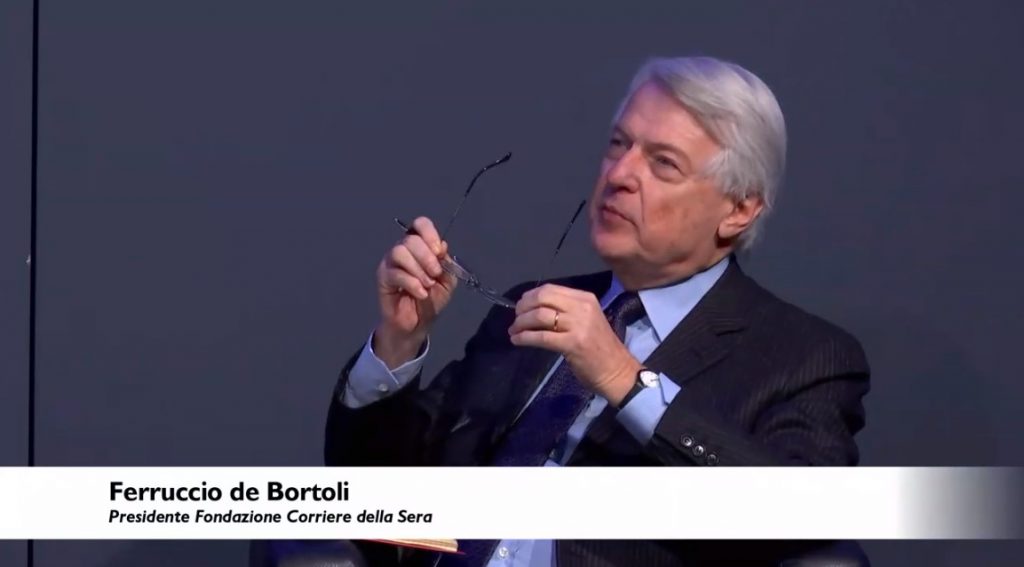
Ferruccio de Bortoli, President of the Corriere della Sera Foundation, concluded “It’s legitimate to have doubts, but that shouldn’t prevent us from exploring the potential of these systems—because if we keep our distance, we risk only suffering their influence without understanding how they work. That’s why I believe it’s crucial to understand the mechanism, to have transparency, and to know how it is managed. Who moderates? With what freedoms? With what authority? These are, in my opinion, some of the most important questions we must ask.
Another issue tied to systems like ChatGPT is the distance they create between the source and the information. Until now, Google has provided a list of results along with their sources—ChatGPT completely upends this paradigm. At what point does this type of search become manipulation or distortion? ”
 |
 |