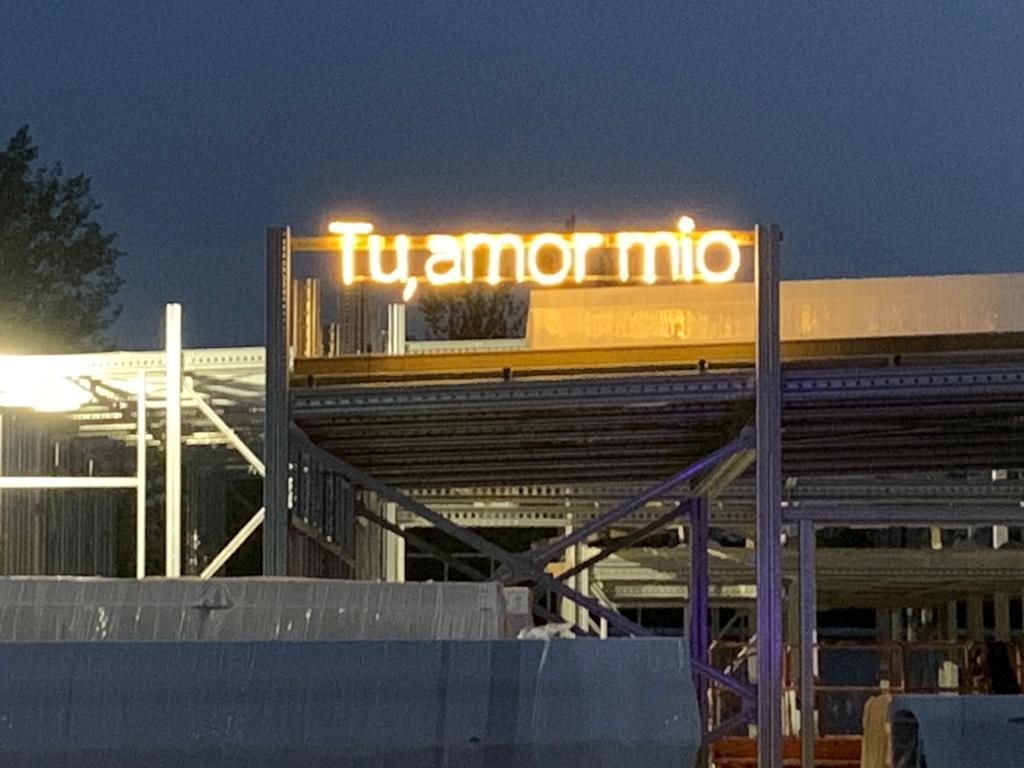
The lights of the luminaria displaying the famous lyric from Mina’s song “Tu, amor mio” have been switched on. The installation was donated by the Pesenti Foundation and recently placed at the front of the construction site of the CR2 Sinapsi Rehabilitation Center, currently under development in Cremona.
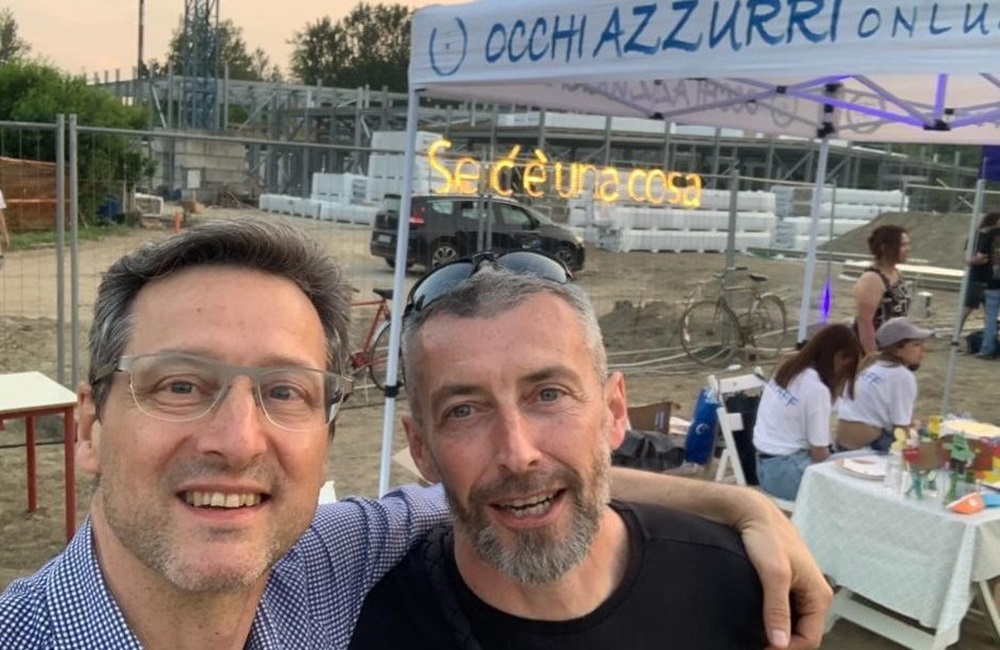
The Foundation took part in the Charity Auction for the CR2 Sinapsi Rehabilitation Center in Cremona, held last June 24. The event involved the auctioning of thirty light installations featuring lyrics from Mina’s songs “Amor mio” and “Vorrei che fosse amore”, with the aim of raising funds in support of Occhi Azzurri Onlus and the future CR2-Sinapsi center.
Among the project’s promoters is Prof. Marco Imperadori—board member of Fondazione Pesenti and Chair of Building Design and Technological Innovation at the School of Architecture, Urban Planning and Construction Engineering of the Politecnico di Milano. Prof. Imperadori, together with his thesis students and PhD candidates, also contributed to the development of the center’s design: a state-of-the-art 1,564 square meter facility for rehabilitation (neurological and beyond) for children, located within the Parco del Morbasco, a large urban green space in the semi-central area of Cremona.
CR2-Sinapsi is a name with a double meaning: “CR” refers to the province of Cremona, and “R2” is short for Centro Ricreativo Riabilitativo (“Recreational Rehabilitation Center”), with the “2” next to “CR” symbolizing the power exponent. The recreational-rehabilitation facility, already under construction, is designed to provide neurological therapies for children with cognitive disabilities and psychomotor delays. Within the center, healthcare, education, and social services will be integrated to ensure comprehensive care for vulnerable children and their families.
Occhi Azzurri Onlus is a nonprofit association founded in 2015 by Silvia and Filippo Ruvioli, born from the need of a family to face a rare genetic disorder affecting their son, Orlando. From the very beginning, it has been a creative hub of ideas and initiatives, giving rise in just a few years to a wide range of activities—from scientific research to a summer camp for children with neurodevelopmental disabilities, to a venue in the heart of the city open to events and conferences with specialists and researchers. All these projects share a single goal: to develop services in support of families dealing with the experience of genetic diseases leading to disability.