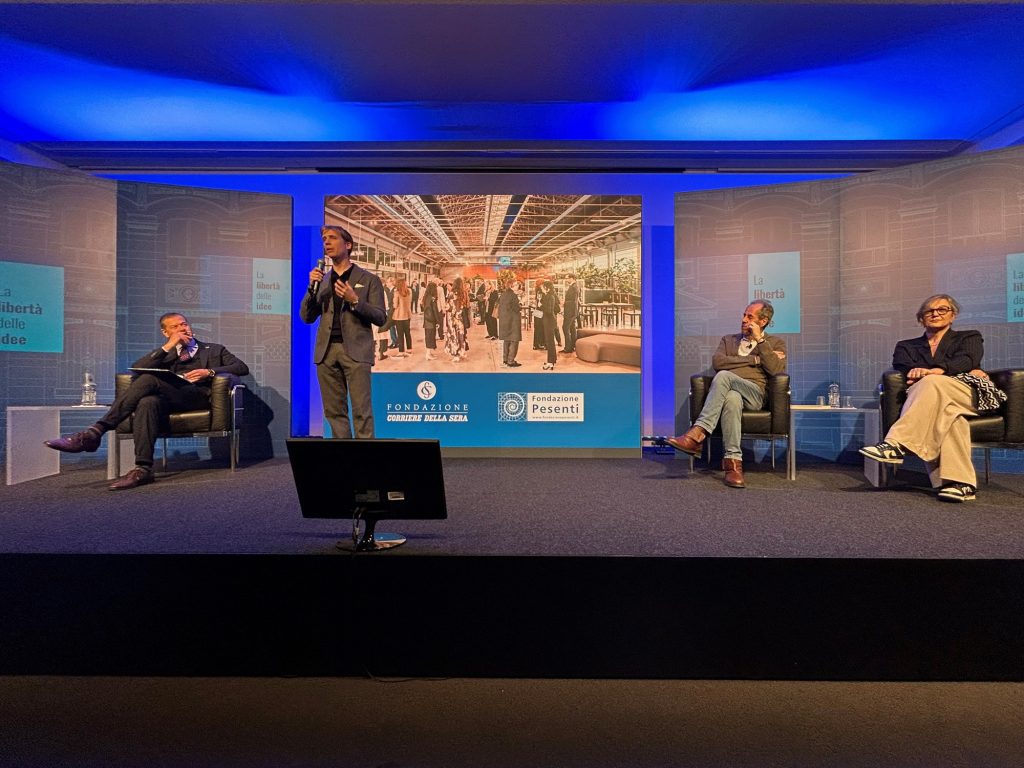
Imagining the Living of the Future, organized as part of the Fondazione Pesenti Ets’ collaboration with Fondazione Corriere della Sera, explored the themes covered in the book Città foresta umana. L’empatia ci aiuta a progettare by Mario Cucinella with Serena Uccello published by Einaudi.
Opening the meeting was Roberto Pesenti, president of gres art 671, an example of the ability to “rediscover places that have left traces, that have stirred emotions,” which-in the words of Mario Cucinella-is one of the key functions of architecture.
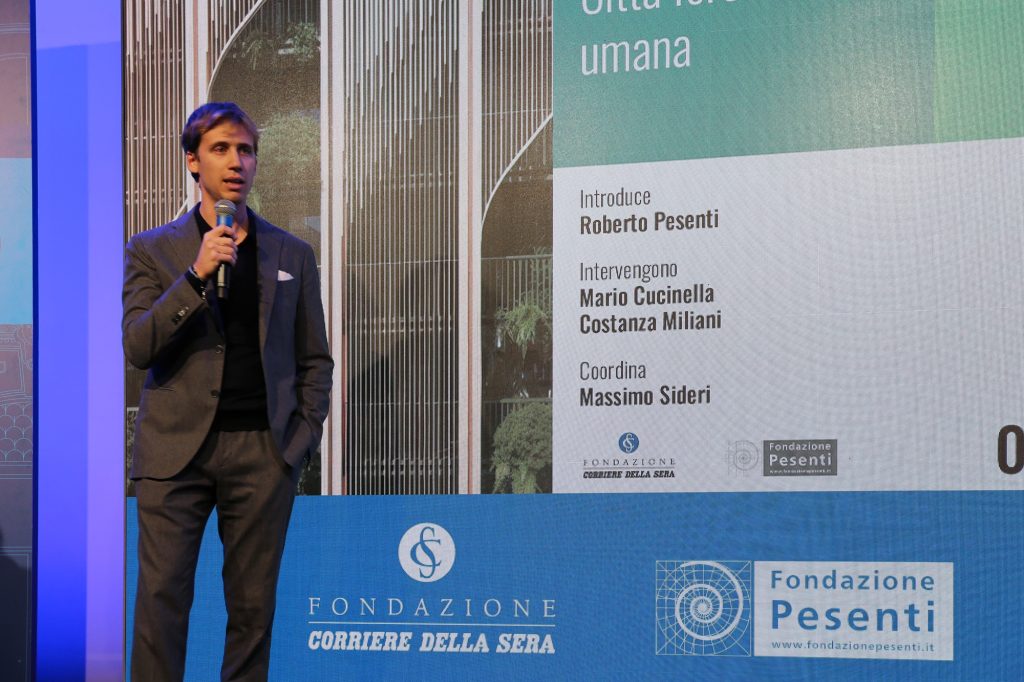
Roberto Pesenti
Roberto Pesenti, greeting the many participants present in Sala Buzzati and connected on the Corriere’s platforms, expressed gratitude to Fondazione Corriere and President Ferruccio de Bortoli for the well-established collaboration between the foundations. Pesenti also wished to pay tribute to architect Mario Cuccinella, whose innovative vision has been the basis of several projects that have characterized the Group’s commitment to the territory and innovation.
“gres art 671 is a work of urban regeneration that not only renews the architectural fabric of the neighborhood, but also reconnects it to the surrounding urban context, creating a bridge between history and the present“, recalled Roberto Pesenti in explaining how the idea to develop this important area of the city came about, what gres art is, and what its ambitions are in the future, how the project fits into Bergamo’s development vision and how it fits into the broader development of gres hub (former industrial gres production area).“This multifunctional space, designed for everyone, which puts the visitor at the center, hosts exhibitions, workshops, a bookshop, a bistro, a coworking area, an indoor garden and spaces dedicated to study and families. Our goal is to offer a unique, stimulating and engaging experience that enriches the lives of citizens and positions Bergamo as an increasingly dynamic and attractive city. ”
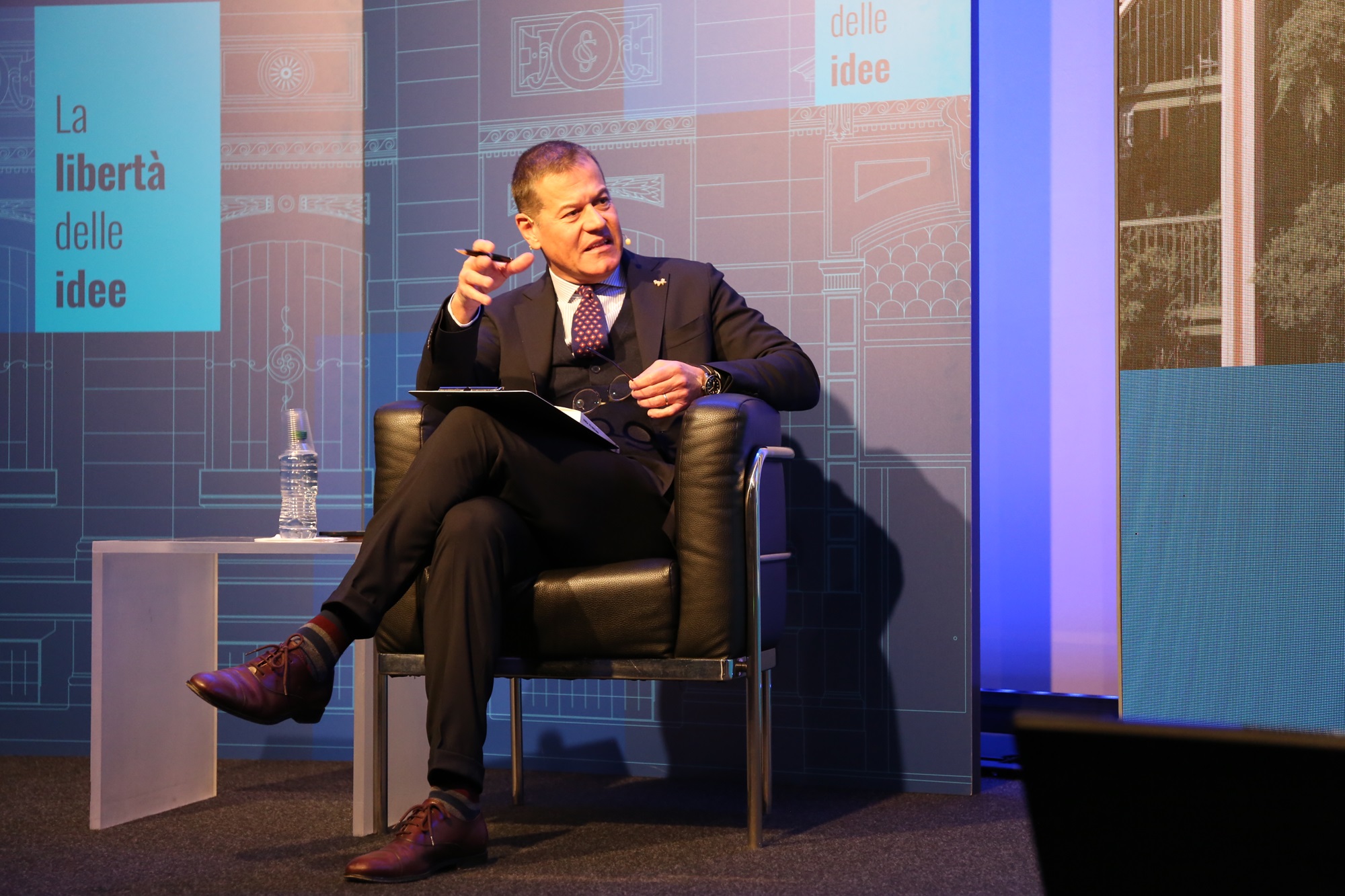
Massimo Sideri
Moderating the meeting was Massimo Sideri, Corriere della Sera columnist: “We talk about the city as a place of transformation where sustainability and environmental protection are crucial issues, which strongly intersect with our artistic and cultural heritage, particularly if we think about the problem of conservation. The book from which this meeting written by Mario Cucinella with Serena Uccello is inspired is an attempt to create a dialogue between humanity and nature, nature as a source of teachings and inspiration for the profession and for living, in a kind of newfound empathy. ”
Mario Cucinella, Architect and designer, recalled, : “The future is not necessarily ahead of us. At this time when we are seeking a new friendship with the environment-because we have forgotten that we live in this relationship-studying the architecture of the past can be a valuable tool to achieve the goals of the next 30 years. Indeed, in the past, before the advent of technology, complicity with the environment was necessary for survival itself, as the only source of energy. There are certainly alternative ways that we have set aside taking advantage of the practicality of technology. But are we really ready to make a quantum leap? Real change requires a profound cultural overhaul. The news that large financial groups have pulled out of the CO2 reduction agreement is an important signal; it means perhaps we don’t believe in it enough or that politics can really change our path. ”
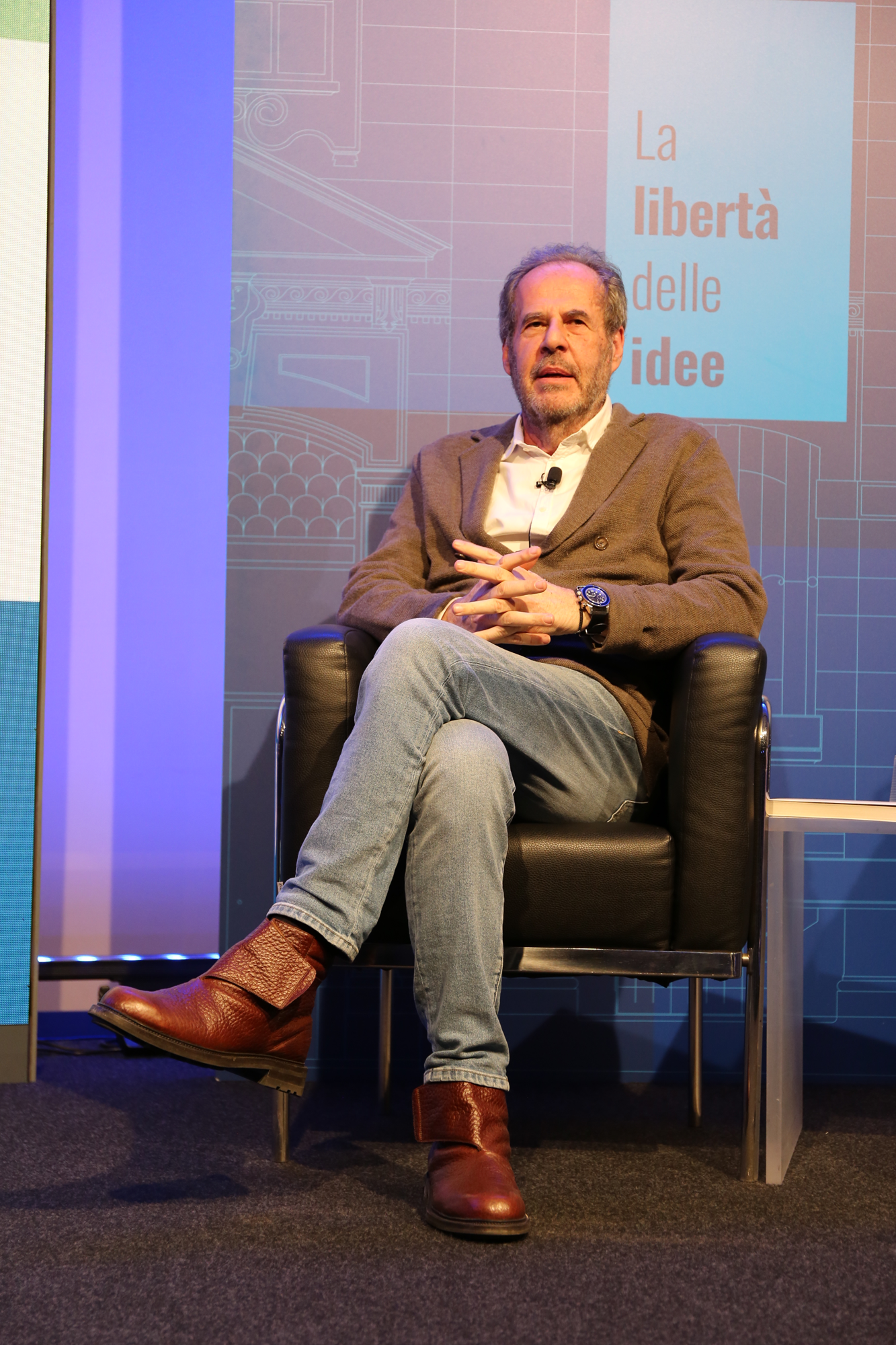
Mario Cucinella
Costanza Miliani, Director, Institute of Cultural Heritage Sciences, CNR highlighted: “At CNR we study the technologies of the past to identify the best solutions for preserving cultural, architectural or archaeological heritage. Our research has focused not only on ancient construction solutions, but also on the innovative choice of materials used in the past. Among past innovations we can mention quicklime mixed with organic compounds, such as plants, starch extracted from rice, organic material extracted from succulents or egg, this gave the mortar greater flexibility and strength. A case in point is Roman cement, which in fact demonstrated incredible sustainability and durability. It is a material made from readily available raw materials-again an important issue for sustainability-such as pozzolan, quicklime, and seawater, which form an inhomogeneous, highly durable system that is able to regenerate itself over time, given its ever-active formula, even in very hostile environments such as seawater itself. One could think of renewing this idea of chemistry, which is the basis of ancient materials, and repurposing it now for new sustainable materials. ”
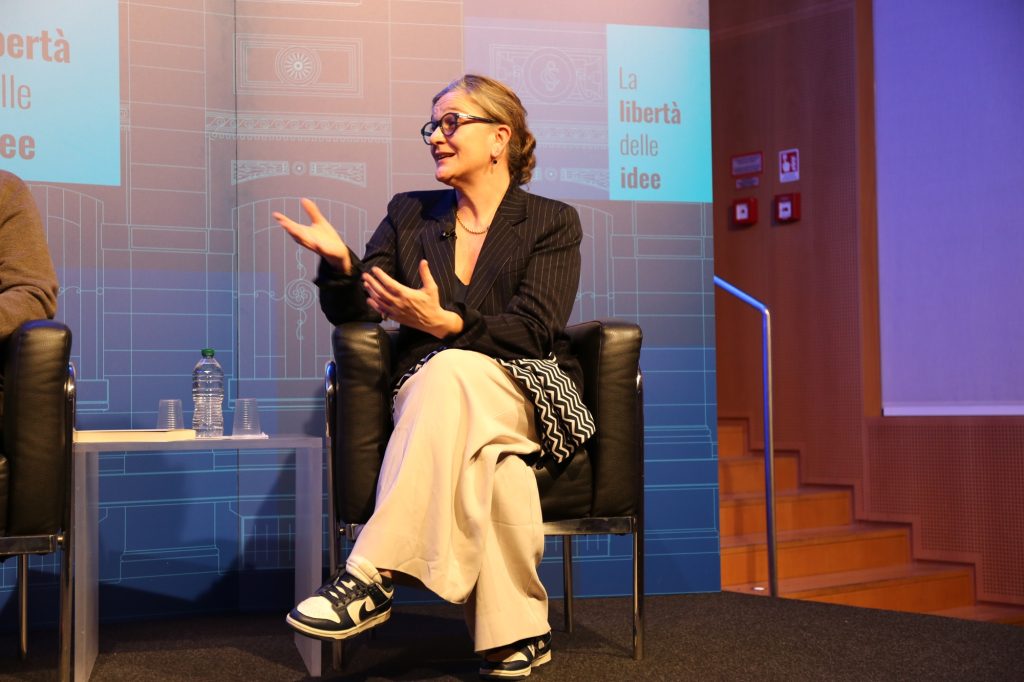
Costanza Miliani
REWATCH THE LIVE
INSIGHTS
corriere.it | facebook.com/corrieredellasera
fondazionecorriere.it | facebook.com/FondazioneCorriere