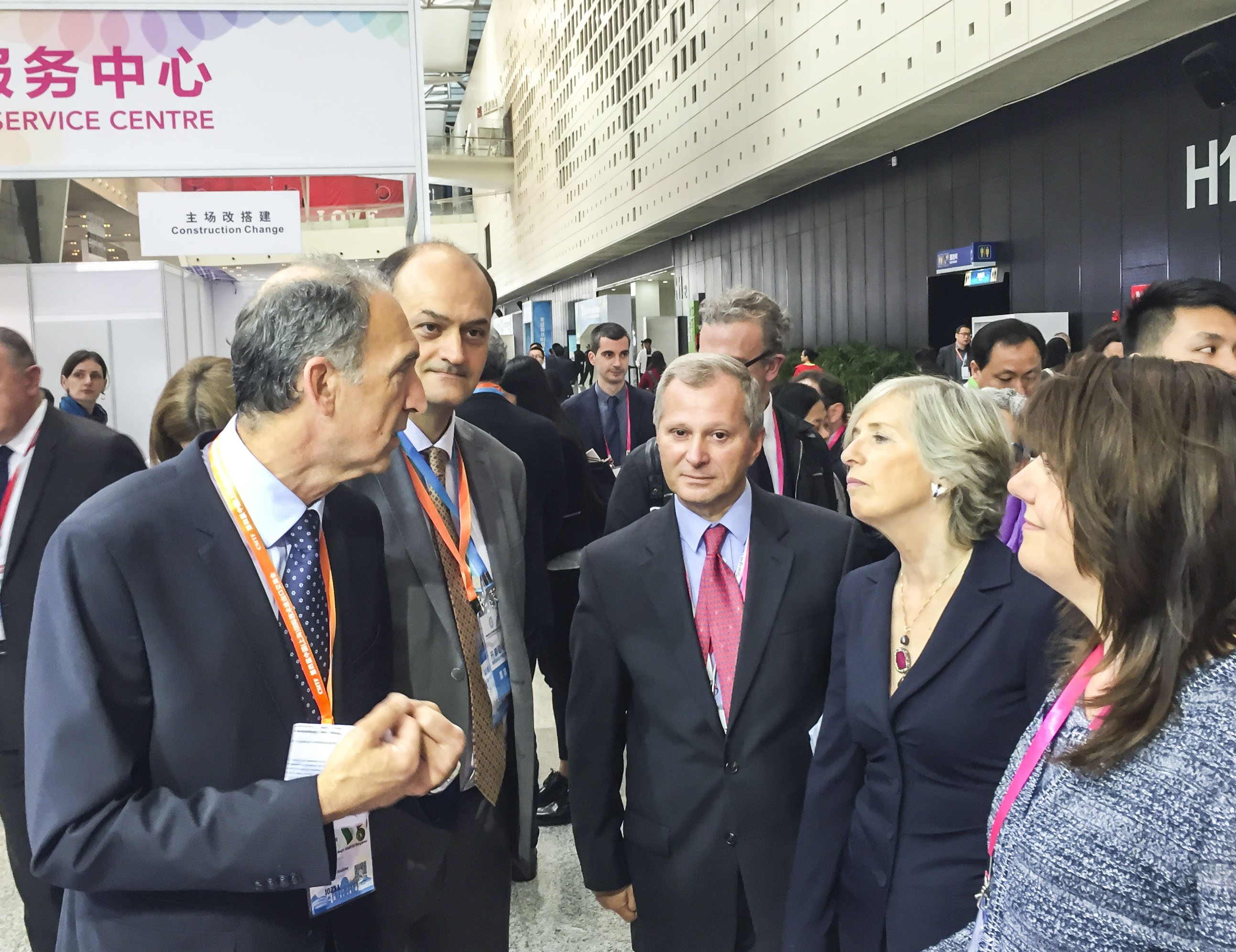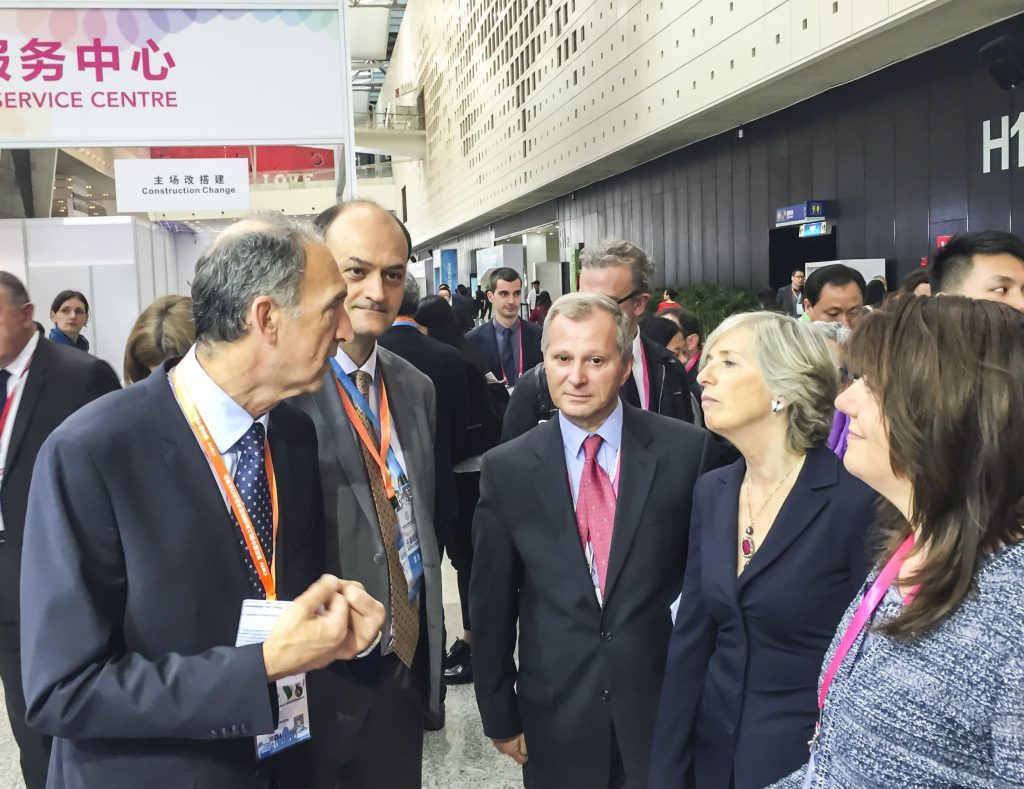
Bergamo 2.035 and Smart Aging invited to the largest science and technology fair in China.
Population aging, preservation and enhancement of a community’s socio-cultural heritage, the role of smart technologies in improving quality of life, and sustainable mobility and logistics—these are some of the key themes tackled by the Bergamo 2.035 and Smart Aging projects. Both were selected and invited to participate in the prestigious China (Shanghai) International Technology Fair (CSITF), held April 21–23 in Shanghai.
The CSITF Fair
 Now in its fourth edition, the China Shanghai International Technology Fair (CSITF) has become one of the leading showcases for high technology in China. It offers an important opportunity for networking with top Chinese and international companies and research institutions.
This year, Italy was featured as the guest country of honor, with its own pavilion dedicated to the theme of smart cities. In China, the topic of intelligent cities and communities is also gaining momentum among central, provincial, and local governments, which are increasingly seeking international partnerships to manage urban transformation and develop innovative solutions.
Within this context, the University of Bergamo was selected and invited by the Italian Ministry of Education and Research and the Ministry of Foreign Affairs to contribute to the exhibition with two ongoing research projects:
Bergamo 2.035 – A New Urban Concept, developed in collaboration with Fondazione Pesenti, with support from Harvard University and the Municipality of Bergamo;
Smart Aging, a research consortium led by the University of Bergamo involving institutions such as the Mario Negri Institute, CNR, University of Brescia, and companies like ESAOTE, STMicroelectronics, Technogym, and SALF.
The Italian Pavillion
The Italian pavilion was inaugurated in the presence of a large delegation from top Italian industrial and research organizations (including Ansaldo, Finmeccanica, CNR, Sant’Anna School of Advanced Studies in Pisa, La Sapienza University of Rome), led by Minister Stefania Giannini and the Italian Consul in Shanghai, Stefano Beltrame.
Minister Giannini also participated in the Sino-Italian Scientific Cooperation Conference organized by the Chinese government, where speakers included Wan Gang, China’s Minister of Science and Technology, and Yang Xiong, Mayor of Shanghai.
Minister Giannini visited the Italian pavilion, taking time to explore the stands of both University of Bergamo projects.
During her visit, Professor Andrea Remuzzi, scientific lead for the Smart Aging project, presented the project’s results: “The Smart Aging project is developing a platform to collect data on elderly individuals’ lifestyles, aimed at improving their autonomy and health. The Minister showed interest in the project’s challenges and appreciated the way technology is being used to support longevity ”.
Progetto Bergamo 2.035
The Bergamo 2.035 project also attracted strong interest. As Professor Sergio Cavalieri, Vice-Rector for Technology Transfer, Innovation, and Research Enhancement, noted:“In China, local municipalities are increasingly realizing the importance of designing cities that prioritize quality of life, preserve cultural and historical heritage, and use technology as a true driver of social innovation—aligned with the community’s socio-cultural development. The Bergamo 2.035 model could become a real European case study, exportable to China, to develop innovative strategies, models, and solutions for smart community prototypes—particularly in central Chinese regions with urban characteristics similar to Bergamo’s ”.
The Chinese trip also served to establish and strengthen institutional ties with Chinese universities and research centers, promoting faculty, researcher, and student exchanges.
Professors Matteo Kalchschmidt, Vice-Rector for International Relations, and Maria Gottardo, Head of Asian International Relations, visited Dalian University of Foreign Languages and Nanjing Normal University.
“The meetings,” said Prof. Kalchschmidt, “focused on expanding existing agreements into new academic fields and co-developing innovative projects to foster collaboration between students and faculty. For example, with Dalian University we discussed educational programs enabling Chinese and Italian participants to share a common learning path involving classes, cultural activities to better understand the local context, and internship opportunities .”
CSITF-2016
Brochure