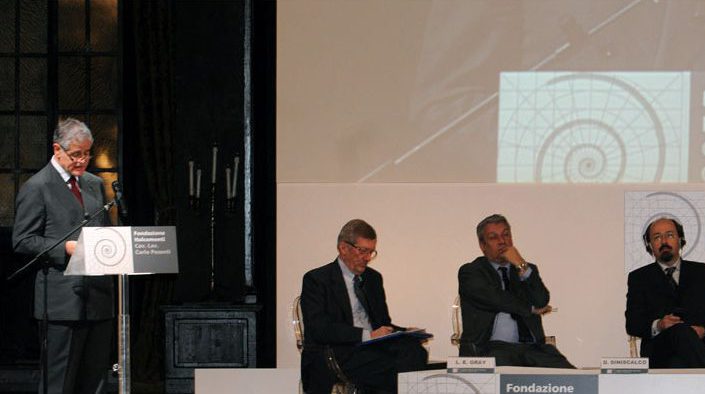
“A turning point is needed to respond to the crisis.” The annual conference fills the Donizetti Theatre to reflect on Obama’s America.
The debate, introduced by Roberto Formigoni, President of the Lombardy Region, featured Alberto Alesina, Professor of Economics at Harvard University; Domenico Siniscalco, Managing Director of Morgan Stanley International; Bill Emmott, writer and former Editor-in-Chief of The Economist; and Lawrence E. Gray, professor at John Cabot University. Conclusions were entrusted to the Nobel Prize winner in Economics Michael Spence.
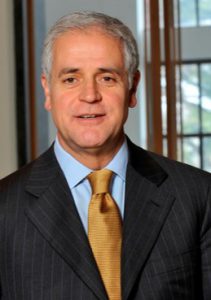
Roberto Formigoni, who opened the event, highlighted how “the global financial and economic crisis we face is clear proof of the interdependence that characterizes the contemporary world. But if interdependence is the path that led to the crisis, it also represents the path out of it, which however cannot be taken without authoritative political action by the United States.”
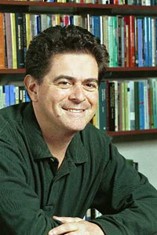 Alberto Alesina illustrated the characteristics of the American recession, warning of the risk of choosing public interventions as the response to the crisis.
 “To give responses in the short term, it is necessary to act on levers that produce immediate effects,” declared Domenico Siniscalco, “even though it is necessary to provide direction to find a way out of the tunnel with a common vision.”
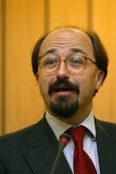 Bill Emmott referred to the particular situation in Europe: “Our continent is characterized by excessive internal divisions that must be overcome if we want to achieve real political leadership.”
 In addition, Lawrence Gray emphasized that “Especially in Europe, we must overcome the idea that the causes of the crisis are solely attributable to America.”
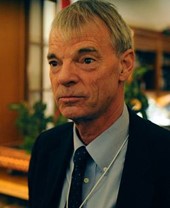 Nobel Prize winner Michael Spence spoke of poverty reduction, health protection, and employment growth in emerging countries as pillars of global economic development. “The political and social aspects of each individual country, especially developing ones such as India and China, must be analyzed and reconsidered, as there is a strong interdependence within the global financial system.” stated the economist.
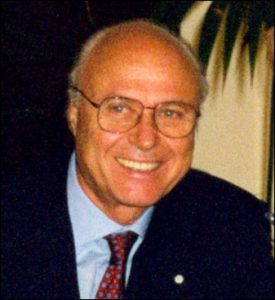
“The crisis we are experiencing,” emphasized Giampiero Pesenti, President of Italcementi,“has the flavor of an epochal transformation, and the inauguration of the new young President of the United States, in 38 days, carries a very strong symbolic value, especially because in his first speech after the election, Obama spoke powerfully of hope. Hope for America, but I believe also hope for the rest of the world .”
“Just as the United States is about to embark on a new path,” Pesenti continued, “Europe and our country must rediscover—and they will—the strength and desire to fight with determination to face the crisis, to leave behind the difficult days and regain new momentum.”
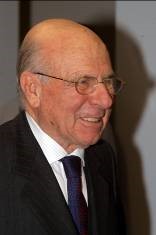 The conference opened with a speech by the President of the Fondazione, Giovanni Giavazzi, who said, “The ambition of this initiative is to root complexity in the territory. To get used to looking far ahead, so we can better understand what surrounds us .”
Michael Spence – “Growth and development perspectives“
Alberto Alesina – “Turning point for the world economy“
Gallery
[ p>