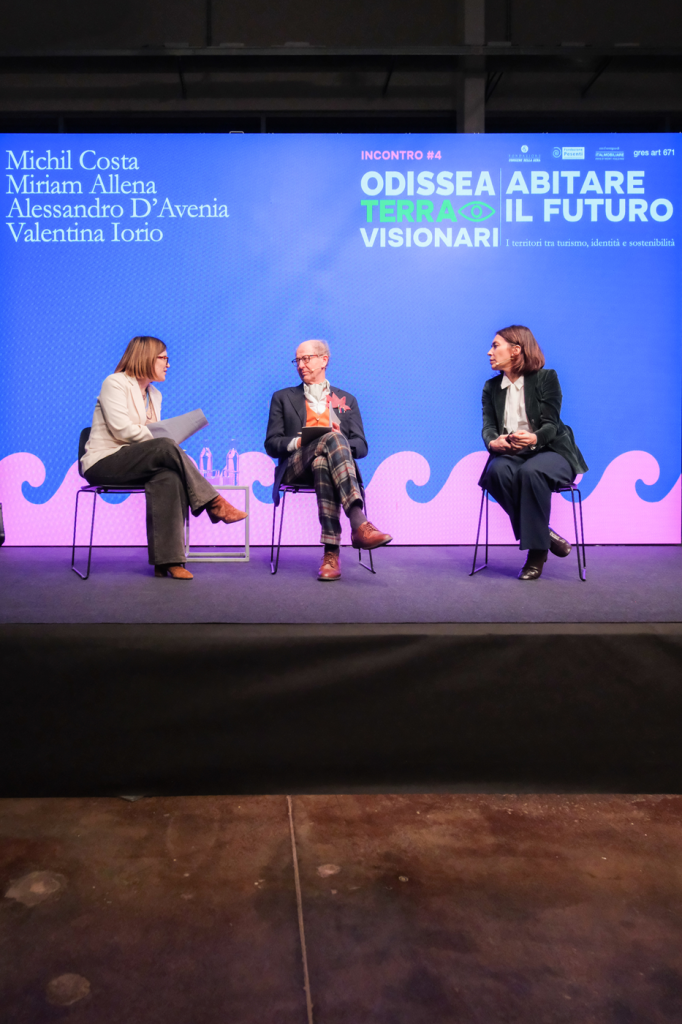
On November 17, the final event of the second edition of Odissea Terra was held in Bergamo, in the beautiful setting of gres+, bringing to a close the programme promoted by Fondazione Pesenti and Fondazione Corriere della Sera, with the support of Italmobiliare Investment Holding, and dedicated this year to Visionaries. The evening focused on “Living the Future. Territories, Tourism, Identity and Sustainability”, exploring the relationship between economic development, environmental protection and the well-being of local communities.
The discussion featured Michil Costa, hotelier, environmentalist and activist, and Miriam Allena, Associate Professor of Administrative Law at Bocconi University and Director of the Transformative Sustainability degree programme, jointly offered by Bocconi University and Politecnico di Milano. Moderated by Valentina Iorio of Corriere della Sera, the conversation addressed the challenges of developing a tourism model capable of creating value without compromising the identity and resources of local territories.
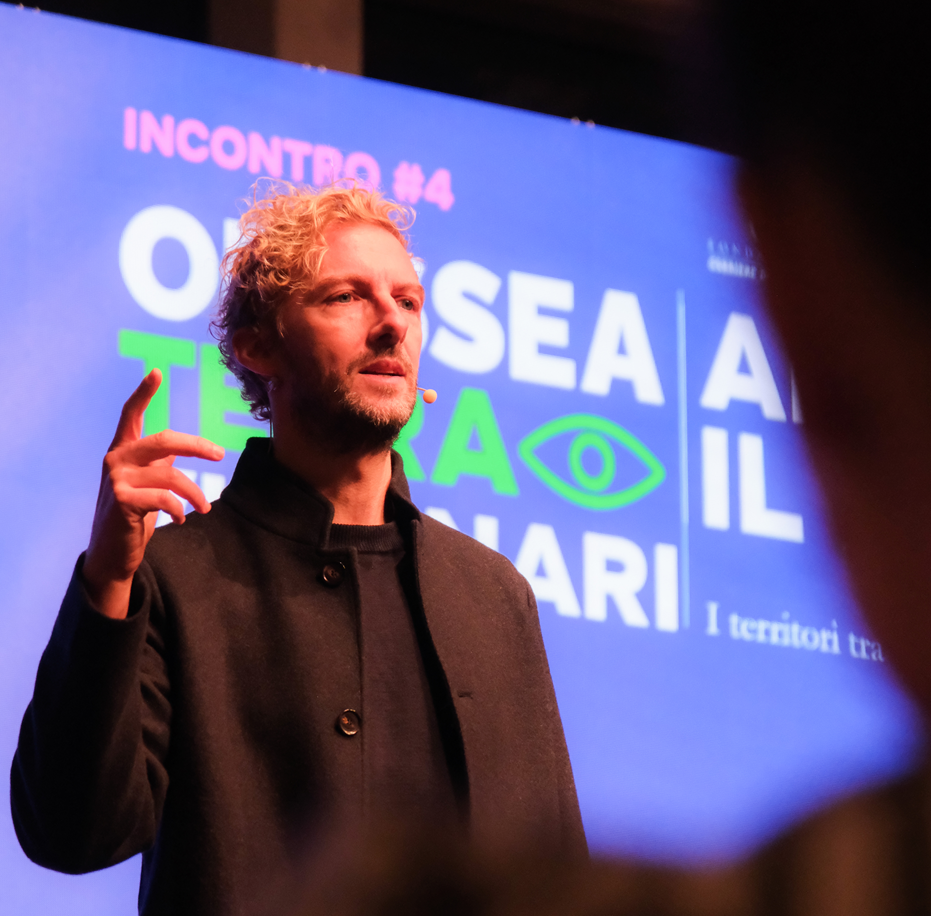
The event opened, as in previous sessions, with a prologue byAlessandro D’Avenia, writer and teacher, inspired by Homer’s Odyssey. Starting from the meaning of Ulysses’ journey, D’Avenia invited the audience to reflect on returning to what truly matters, suggesting that sustainability can also be understood as the ability to recognise and preserve what we already have.
“We do not need to go anywhere; we need to return,” he reminded the audience, encouraging them to rediscover the value of places, relationships and their own roots.
This perspective is also connected to what it means to be a visionary: paying attention to the reality around us and recognising what deserves to be saved and preserved.
Tourism that cares for local territories
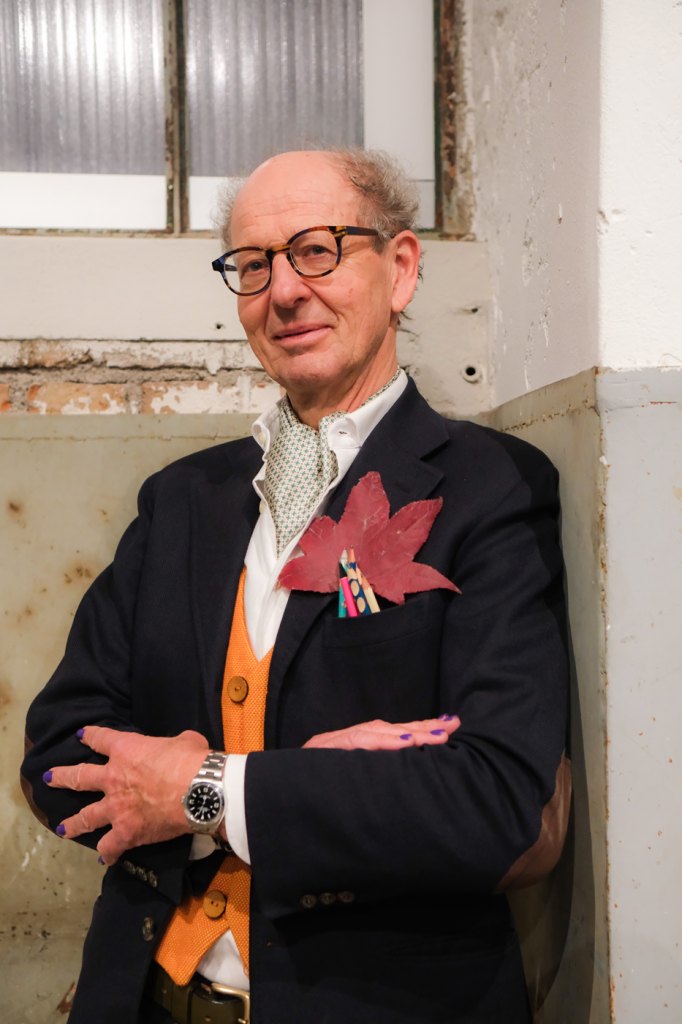
Drawing on his experience in the Dolomites, Michil Costa challenged a tourism model based on the continuous growth of visitor numbers and revenue maximisation, highlighting the need to rethink the relationship between hospitality, the environment and local communities. Tourism cannot simply consume places; it must help preserve them, respecting their rhythms, characteristics and delicate balances. This calls for a renewed sense of limits, the need to manage tourist flows and the opportunity to make conscious choices about the kind of hospitality we want to promote
Michil also emphasised that enhancing the value of local territories cannot be measured solely by an increase in tourist numbers. Combating depopulation and keeping local communities alive requires essential services, public transport, schools and employment opportunities. Tourism monoculture, by contrast, risks impoverishing villages and turning them into places designed exclusively for visitors. Individual operators can also contribute to change through practices that reduce waste, promote responsible food supply chains and foster social inclusion. However, addressing phenomena such as overtourism requires, above all, policies and regulations capable of guiding development.

Law as a tool for living the future
Miriam Allena focused on the role of institutions and regulatory frameworks, highlighting the importance of constitutional protection for the environment. The inclusion of biodiversity, ecosystems and the interests of future generations marks a significant shift in perspective, complementing the protection of rights with greater attention to duties and collective responsibility.
As Miriam explained, the law cannot address the challenges of the ecological transition on its own, but it can provide a framework of principles and rules to guide public and private decisions over the long term. This process requires continuity, even during periods when sustainability policies slow down or are reconsidered.
A key part of the discussion also concerned corporate responsibility. Through instruments such as the European directive on sustainability due diligence, the duty to protect the environment and human rights extends throughout value chains, calling on large companies to involve and support their suppliers in improvement processes. Sustainability thus becomes a shared responsibility, involving institutions, businesses and citizens alike.
The discussion also highlighted the need to consider the environmental, economic and social dimensions of development together. Quality employment, access to services, the right to housing and opportunities for younger generations are all essential to securing a future for local territories and ensuring that tourism growth does not result in new forms of inequality or the impoverishment of communities.
This fourth and final event brings the 2026 edition of Odissea Terra, dedicated to Visionaries, to a close. Through a range of experiences and perspectives, the programme has encouraged a more conscious approach to the challenges of our time, recognising that caring for people, places and shared resources is a fundamental responsibility in shaping the future we want to live in.