The new course “Responsive Environments and Artifacts 2018-19” of Bergamo 2.035 on the theme of the future of air transport, developed by the University of Bergamo and Harvard GSD, has begun.
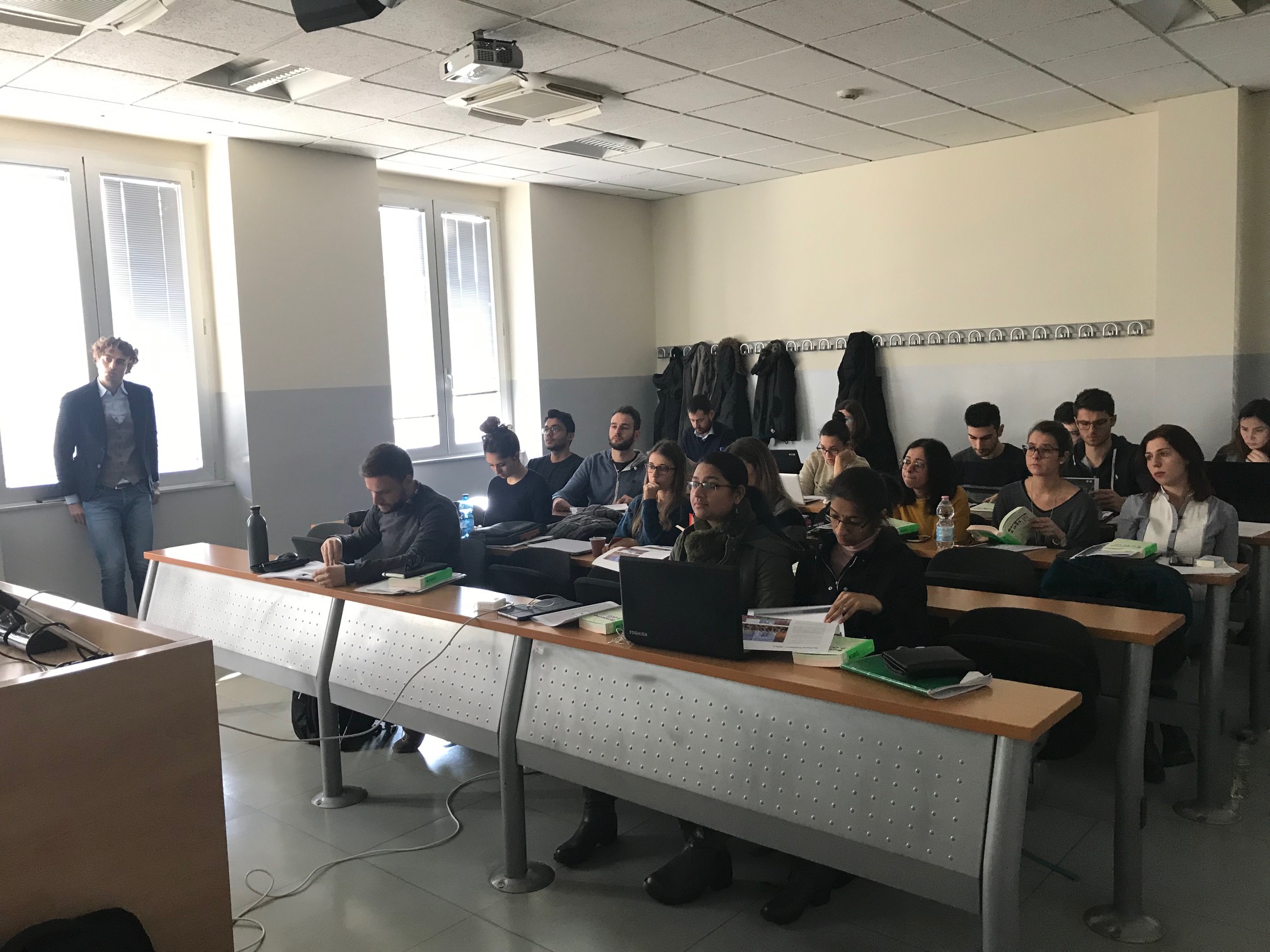
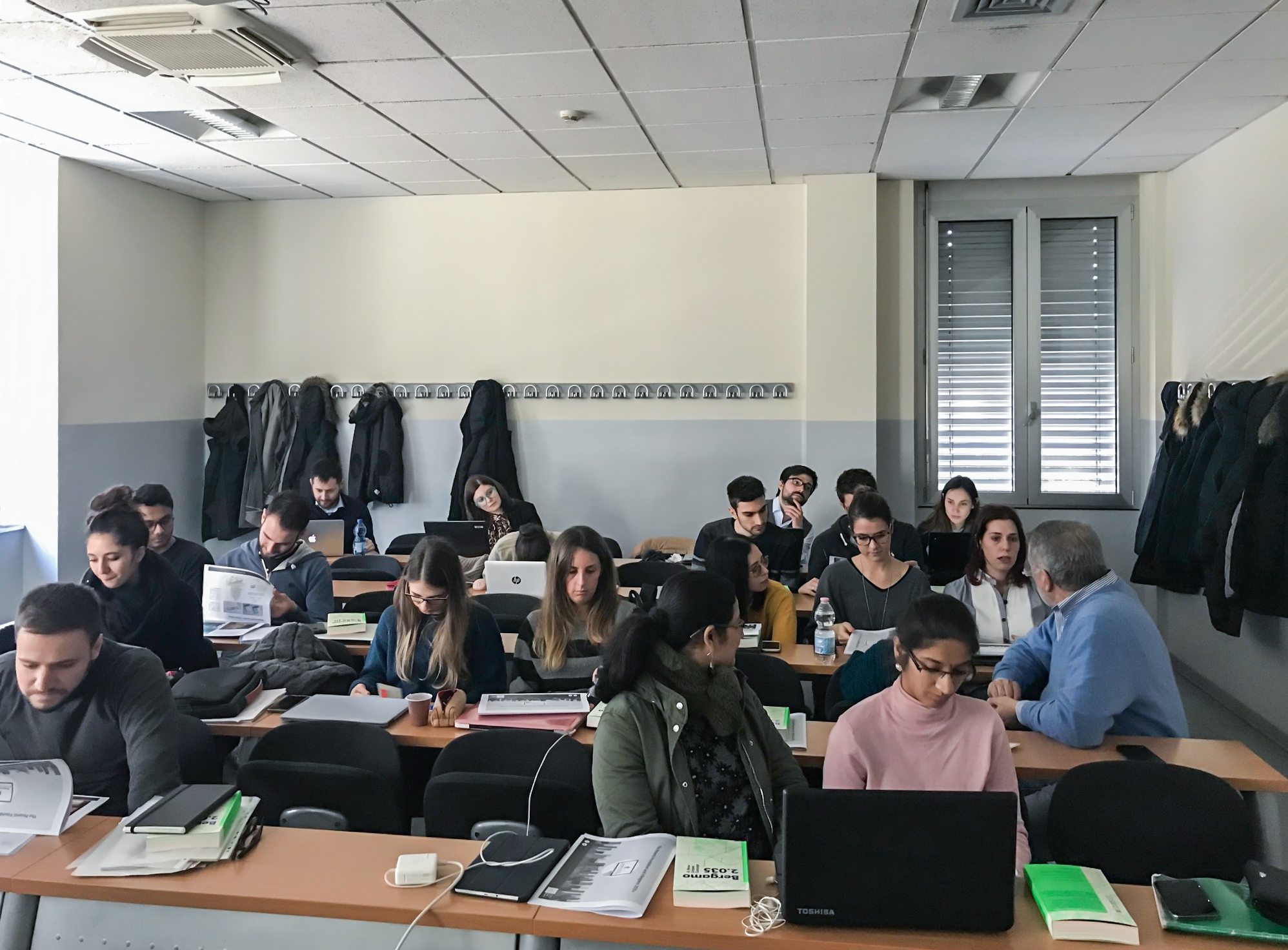
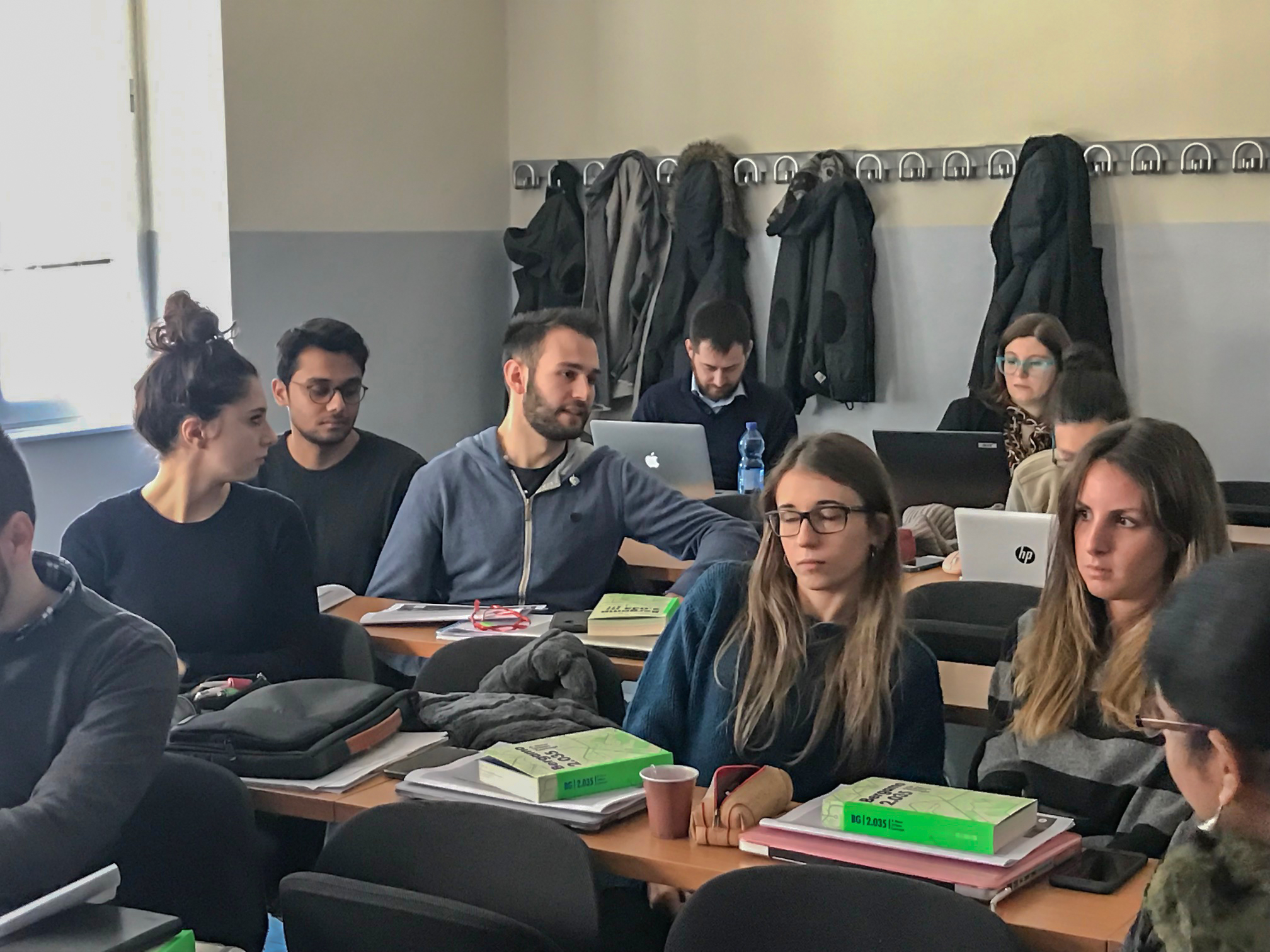
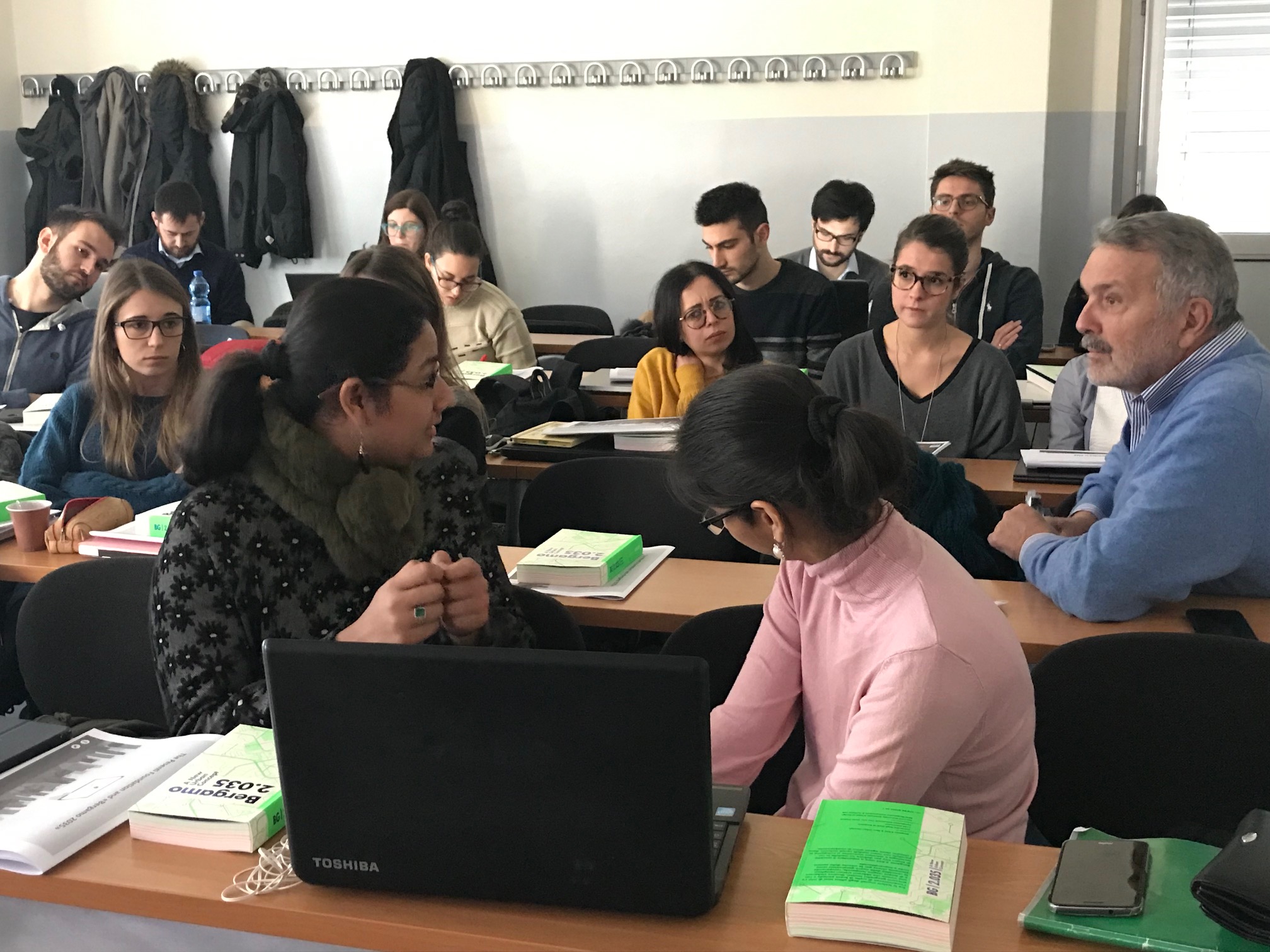
January 19, 2019 – Today, Fondazione Pesenti met with students from the University of Bergamo selected to participate in this year’s Bergamo 2.035 program. “The Future of Air Travel” is the theme chosen for the course “Responsive Environments and Artifacts 2018-19” within the context of the Bergamo 2.035 | REAL Cities – Smarter Citizens program , a multi-year, multidisciplinary research project promoted by the University of Bergamo, Harvard Graduate School of Design, and Fondazione Pesenti, with the patronage of the Municipality of Bergamo.
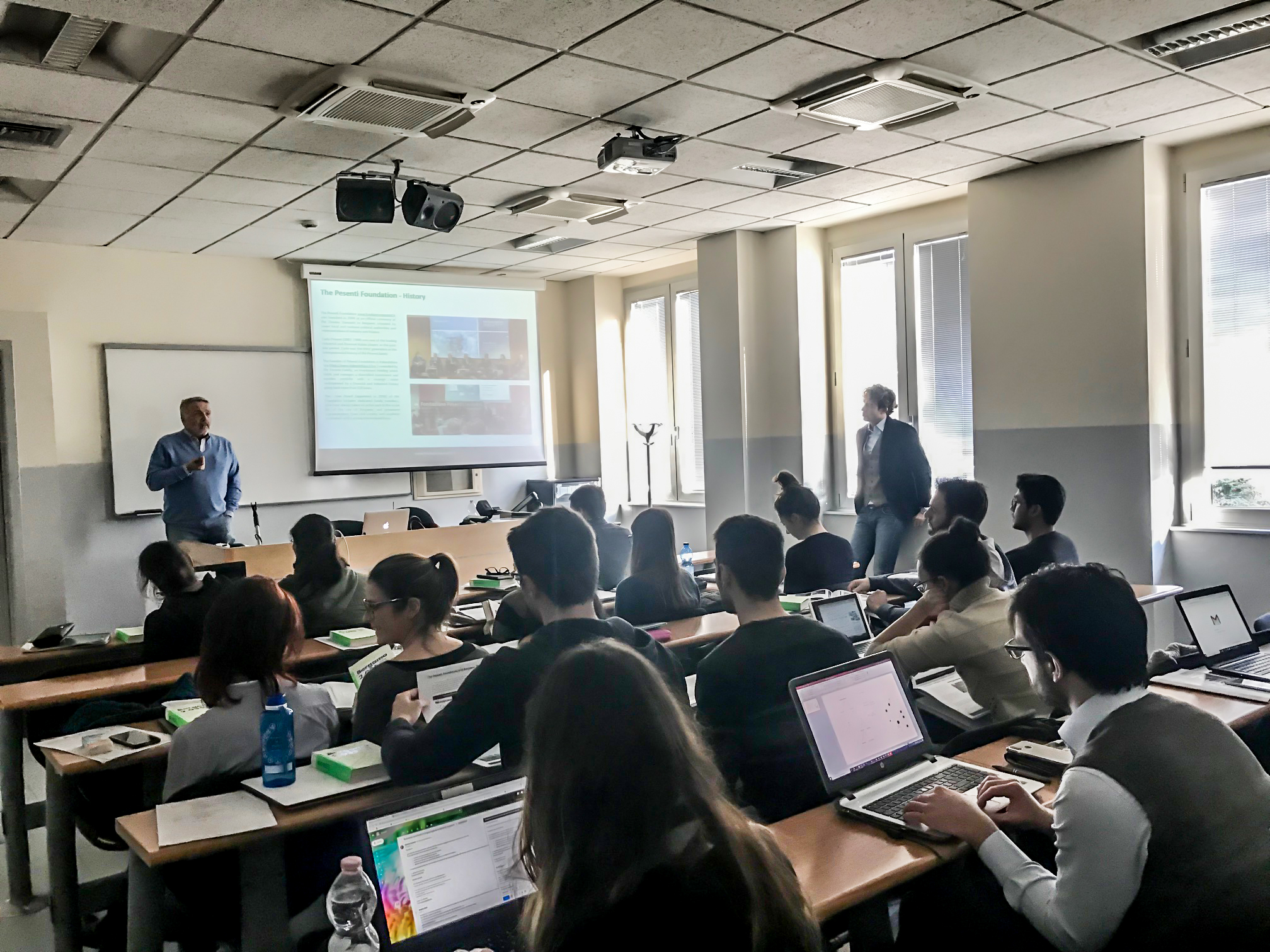
Sergio Crippa, Secretary General, presented the work of Fondazione Pesenti and, in particular, spoke about the fruitful collaboration with the University of Bergamo through support for the Bergamo 2.035 project.
Among the topics discussed, particular attention was given to the Foundation’s new focus on Impact Investing and support for new generations. The meeting concluded with the hope that ideas and projects may emerge from Bergamo 2.035 that will contribute to Start Cup Bergamo (which is itself supported by the Foundation through a special prize).
Also present at the meeting were Stefano Andreani from the Harvard Graduate School of Design, Stefania Danzi from Italmobiliare, and Paolo Pressiani from Start Cup Bergamo.
“The Future of Air Travel”: course description
The growing complexity of today’s urban dynamics – from commercial operations to digital technologies to social transformations – calls for alternative ways of thinking about the cities we live in.
Indeed, it is no longer adequate to think of “human” and “non-human” activities on different and independent levels (economic, social, cultural, etc.), but rather as intersections of multidisciplinary factors and their related interactions.
Studying innovative research and design strategies can help simplify and humanize complex systems at any level and scale.
The course introduces an innovative “design-driven” method developed at the “Responsive Environments and Artifacts” Lab of the Harvard Graduate School of Design (GSD) in collaboration with the University of Bergamo to study and create solutions that address the urgent challenges of our cities.
In particular, the course is based on theories and principles of “design-thinking” and user-centered design, focusing on the importance of understanding and designing specific “experiences” aimed at meeting the needs of the user/citizen/urban actor.
The course is part of “REAL Cities/Bergamo 2.035”, a joint research program between the University of Bergamo and Harvard Graduate School of Design, supported by Fondazione Pesenti.
Using the city of Bergamo as a case study, the course aims to analyze and highlight the relevant social, economic, and urban issues of the area.
This year, the research will focus in particular on the theme of the future of air transport, improving passenger experience and air and urban transport systems.
Brainstorming sessions based on the concept of “design-thinking,” field analysis, and design tools will allow students to address and represent “user experiences” and “urban dynamics,” in preparation for the concept and prototype development activities planned for the following “Spring 2019” semester together with Harvard GSD students.
To this end, students will be introduced to the dynamics of new media, the internet, interactive technologies, augmented reality, and sensing technologies, to conceive new opportunities for the design of commercial activities, digital systems, social change, urban interventions, cultural initiatives, and “responsive” environments (spaces that, through the use of media and other technologies, provide an interactive, rich, and varied user experience).

RESEARCH APPROACH
1. Experiential approach: mapping and improving the traveler’s experience
The main subject of this research will be the technologically enhanced and enabled human experience. The goal will be to find quantifiable ways to map and improve the traveler’s experience, measured and evaluated against contrasting elements such as logistics, security, and economics.
The research outcomes will focus on “technologically-driven” design strategies, engineering solutions, and new ideas capable of finding common ground among these opposing demands. This study aims to have a strategic impact on improving all aspects of air transport.
The research questions include:
– The pick-up and drop-off experience at airports is almost always negative; how can this process be made more pleasant and allow for better time management?
– How can we maintain high levels of security while also ensuring a pleasant experience? What are the psychological factors that influence the travel experience, and how can they be addressed through different design strategies?
– Long queues are inevitable in any complex system that requires flow management. How can we shorten waiting times or create the perception of shorter waits?
– How can we improve baggage distribution or the waiting experience at the carousel? Would it be possible to implement basic technologies to enable location tracking of luggage and signal its proximity to the passenger?
– Lack of information and communication can cause unnecessary anxiety. How can we design continuous and effective communication to ensure optimal levels of passenger updates?
– When a passenger lands at a new airport, unfamiliarity with the spaces and context can cause high levels of frustration. How can we use new technologies and new materials to address this issue? How can we improve airport signage, especially during renovation and modernization projects?
– What could be a balance between predictability and pleasant surprises when designing the airport experience?
2. Systemic approach: infrastructures, networks, and urban impact
Airports and air travel have a huge impact on cities and the flow of people, material goods, and energy resources. In some cases, the growth of cities and tourism is almost exclusively due to the new destinations adopted by airlines, and conversely, the growth of cities can cause significant strain on air transport.
This research path will examine the relationship between the airport and the city and its impact on urban dynamics, transport systems, and the physical spaces of airport-city environments.
The research will specifically study the role of airports in influencing territorial development from a multilevel perspective:
– Economic development (e.g., exchange of people and goods, new job opportunities).
– Cultural development (e.g., tourism, exchange of students and people).
– Social development (e.g., social immigration, new forms of leisure).
– Urban infrastructures (e.g., new connections and related facilities).
The course will study the interaction among these different levels and how they can be systematically designed and organized to improve the impact of Orio al Serio airport on the city of Bergamo.
Main topics of the course
– DESIGN RESEARCH: overview of the interaction between design and research. Designing to structure innovative research methods and researching to give rise to innovative design practices. Examples and cases from Harvard GSD complete the theoretical approach.
– DESIGN THINKING: study of design thinking methodologies through the application of original approaches and interdisciplinary strategies to tackle urban problems in any field and at different scales. Sometimes solving a problem requires an innovative and interdisciplinary mindset that goes beyond conventions. By combining subjective analysis with objective data, students will reconsider urban challenges by approaching them from an unconventional perspective, beyond rules and conventions.
– HUMAN-CENTERED DESIGN AND USER EXPERIENCE: principles of human-centered design, with particular attention to strategies for evaluating and predicting user experience from the perspective of different types of individuals. Strategies include: user experience scenarios, personal studies, user journey design, simulations, and digital models.
– SMART CITIES: definitions, models, and case studies of smart cities. With a focus on human experience, analyzing the impact of technology use in the dynamics, mechanisms, and experiences of cities. Case studies will focus on urban interventions that promote positive change and use technology creatively.
–RESPONSIVE TECHNOLOGIES: opportunities and implications in integrating new media, sensors, and interactive technologies into cities, addressing the issues of technological longevity, dynamic adaptation, and augmented realities.
– FUNDAMENTAL OF URBAN ANALYSIS: application of methods and tools to understand urban configuration and place dynamics, with particular attention to mapping urban systems and transportation modes.
www.bergamo2035.it

www.gsd.harvard.edu